


Weapons and armor
Many types of armor that are part of standard default D&D are not present on Yen. Instead, other types, agreeing with an oriental setting, are common. For weapons there is less difference; the people of Yen use all kinds of deadly devices, except gunpowder weapons and more advanced killers.
Armor per race
The use of armor is common among tarhar, telgu, thref and wekalai warriors.
Rich and powerful Leaders may have suits of plate armor made for them, but ordinary troops use lamellar, mail, or simply cloth armor.
Some telgu wear helmets that fit their horns but these are expensive and rare.
Simi wear armor but in areas dominated by forests, their natural habitat, they use only light armor, if any,
because heavy and/or stiff armor is a severe burden when moving through the trees.
Nhokkur, with their hard shells, have no need of artificial armor.
Weka, being stealth hunters, only very rarely use armor and if so, only small pieces.
Flying and swimming species like the iihh and surume do not use armor at all, as this would only drag them down.
All armor is made for a specific race. Simi, tarhar, telgu and wekalai cannot wear each other's armor, though sometimes armor parts are recycled by smiths.
Armor types
Shields never gained a foothold on Yen; all body protection is armor ("gusoku" in Go). Scale armor was used in the past but has fallen out of use; western style riveted mail and full plate never really developed on Yen. Lamellar is now the most common type, but others do exist.
| Name | Armor Class (AC) | Weight | Cost | Stealth | Perception | Comfort | Remarks | |
| No Armor | ||||||||
| None | 10 + Dex modifier | 0 lb. | 0 gp | - | - | - | ||
| Light Armor | ||||||||
| Nuno uwagi | 11 + Dex modifier (max 3) | 8 lb. | 5 gp | - | - | - | Padded cloth jack. | |
| Iyozane kawa | 12 + Dex modifier (max 2) | 10 lb. | 15 gp | - | - | - | Cuirass made of leather lamellae. | |
| Tatami gusoku | 13 + Dex modifier (max 2) | 18 lb. | 40 gp | x2 | - | - | Small metal plates connected by mail. Lightweight, foldable. | |
| Medium Armor | ||||||||
| Nuinobe haramaki-dō | 14 + Dex modifier (max 1) | 20 lb. | 45 gp | x2 | - | x2 | Cuirass with large, mildly overlapping metal lamellae (iyozane). | |
| Kozane haramaki-dō | 15 + Dex modifier (max 1) | 25 lb. | 60 gp | x2 | - | x2 | Cuirass with small, strongly overlapping metal lamellae (kozane). | |
| Okegawa-dō | 14 + Dex modifier (max 2) | 25 lb. | 100 gp | - | - | x2 | Breastplate of horizontal bands of metal, riveted together. | |
| Heavy Armor | ||||||||
| Kozane gusoku | 16 | 40 lb. | 85 gp | x2 | - | x2 | Suit with small, strongly overlapping metal lamellae (kozane). | |
| Helmet | ||||||||
| Akeru kabuto | +1 | 5 lb. | 10 gp | - | - | - | Open helmet. | |
| Kan kabuto | +2 | 8 lb. | 20 gp | - | x2 | - | Full helmet. | |
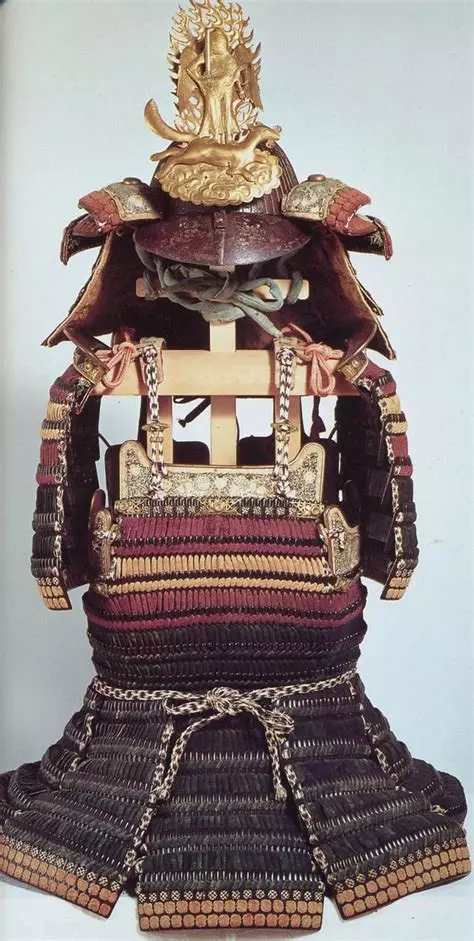
The weights and costs listed above are for medium-sized armor, which resembles human armor the most. Simi are smaller and telgu range in size from small to large, changing these figures:
| Size | Weight | Cost |
| Small | x½ | x¾ |
| Medium | x1 | x1 |
| Large | x2 | x1½ |
The costs listed for helmets is for standard medium-sized helmets; the cost for helmets for tarhar is twice as high, because of their horns.
Weapons per race
Simi and yokani are small creatures, unable to handle bulky weapons like two-handed swords or most polearms. Tarhar and adult telgu can. Wekalai use weapons but often fall back on their claws; weka use natural weapons exclusively. Iihh, nhokkur, surume (underwater) and thref are restricted to natural weapons too. Thref can wield light weapons with their tentacles, but are loath to do so as those tentacles are vital sensory organs.
Weapons and terrain
On Yen, much terrain is rugged: forest, swamp, mountains.
There horses stumble; pikes point in all directions except the right one; shields are a burden; shooting distances are short.
So warriors wield small to medium length weapons, either one- or two-handed.
Open spaces like the Yrgiz steppes and the Tuarantu desert are less common.
There cavalry can be found, often horse archers and other light cavalry.
Massed infantry formations wielding spears and shields are rare on Yen because population density is low in most areas where they are useful.
Warrior cults
Yen knows a few warrior cults and classes that deserve mention.
Wazai
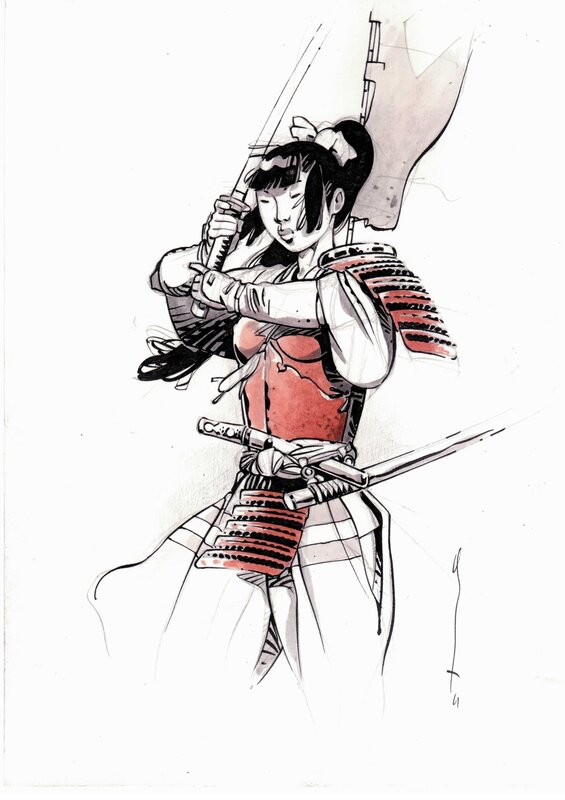
This is a group of warriors who strive for the ultimate perfection in the martial arts.
They focus on maneuver, skill with weapons and also mental aspects of combat.
The aim is not to become a very good fighter and use that skill in wars or other conflicts, but to perfect oneself, a neverending quest.
Not all members are able to sustain such a lifelong dedication and drop out sooner or later.
These people are very much appreciated by warlords.
Those who stay within the order have established fencing schools where aristocrats are taught the basics, for a hefty fee.
In D&D terms the wazai are either fighters
or more specific duelists.
Sōhei
These are warrior monks following hara-nairukyō.
During training, they learn to focus their "ki", i.e. the energy inside them, into sharp outbursts of power.
The strength, dexterity and decreased vulnerability resulting from this is mythical and legendary, but not as excessive as some myths suggest.
In D&D terms they are either monks
or more specific sohei.
Jumamen
Followers ju-nairukyō prefer peace of war but occasionally have to fight. The armed branch of this religion is called the jumamen. Like some catholic priests of Earth they are forbidden to shed blood, so wield blunt weapons instead of sharp ones. But unlike those catholic priests they don't practice skullduggery with heavy weapons like maces of greatclubs. Their weapons are gentler: small clubs, staffs and entangling weapons like nets and lassos. They compensate the lack of lethality being honing their skill, until they become experts in neutralizing opponents, instead of killing them.
Fortifications
The traditional forest fort is the simi "kiko", high up in the trees.
The most basic ones are little more than platforms; more advanced types have walls; the best are completely enclosed cabins with arrow slits.
From there they fire projectiles at enemies, or make sorties.
On the plains, and also in half open terrain, forts are larger and sturdier, hill forts with ditches and palisades or motte and bailey.
These forts are designed to keep raiders out and work well against tarhar cavalry.
But simi, weka and wekalai are excellent climbers, able to scale even vertical walls without the use of ropes, ladders or towers.
Therefore, fort builders honed their skill until they were able to construct dry stone walls.
They went further than the best masons on Earth and created extremely smooth walls without noticeable seams, to deny would-be climbers even the tiniest hand- and footholds.
Cavalry
Horses
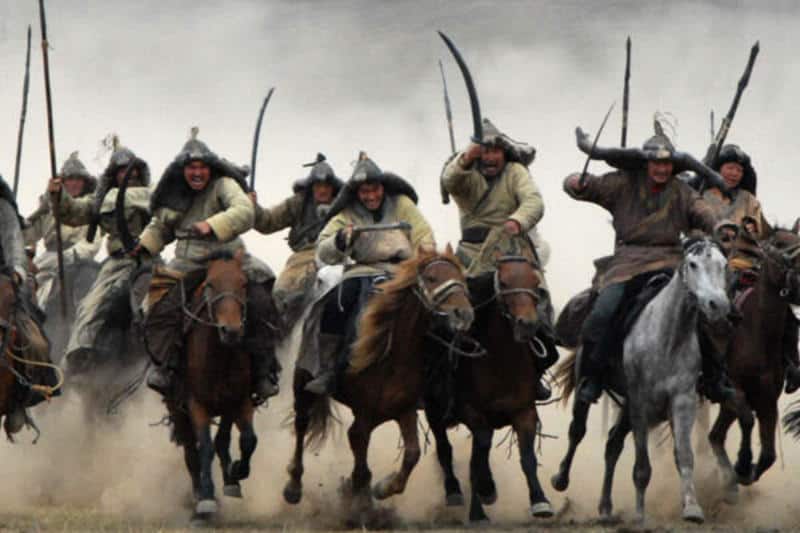
Though wild horses roam the forests of Yen, they are seldom used as mounts there. The situation is different on the plains, especially the Yrgiz steppes. There tarhar armies are almost exclusively cavalry, mostly horse archers. The tarhar use their mobility to wage fast fluid wars over long ranges. Their raids extend into the Hurannar highlands, where they fight the telgu. The surrounding forests, swamps and mountains suffer fare less, because horses have trouble with the rough terrain.
Camels
Camels are mostly used as riding and pack animals, not as war mounts. An exception are the nomads of the Tuarantu desert, who favor camels. Simi seldom ride camels but when they do, they often mount two riders on them. Young telgu do the same; old telgu stick to one man per mount; very old telgu are too heavy to ride camels.
Elephants
The mighty elephants are prestige war mounts in Nkala, though the terrain often hampers their use.
Ironically, they fight mostly on the neighboring south Yrgiz steppe.
Each war elephant carries several simi warriors, armed with missile weapons.
The animals themselves too are trained to fight with tusks and to charge at enemies.
They are fought with counter-missiles, noise, fire and magic, which can cause them to panic and stampede,
often right through their own ranks.
Geygir
Of course the Maziq nomads of the Yrgiz steppes use their geygir in war, mostly as missile platforms. Geygir are taller, more stable and can carry more archers than elephants can. However, the animals do not fight themselves, being too slow and docile.