


Introduction
Unfortunately spellcasting characters, magic on Yen comes with a heavy price, the 'Bane of Magic' (see below). However, it does set spellcasters apart and can push towards powerful roleplaying. Still, DMs may want to exclude player characters from the Bane of Magic in order not to disadvantage them to other player classes.
Nature of magic
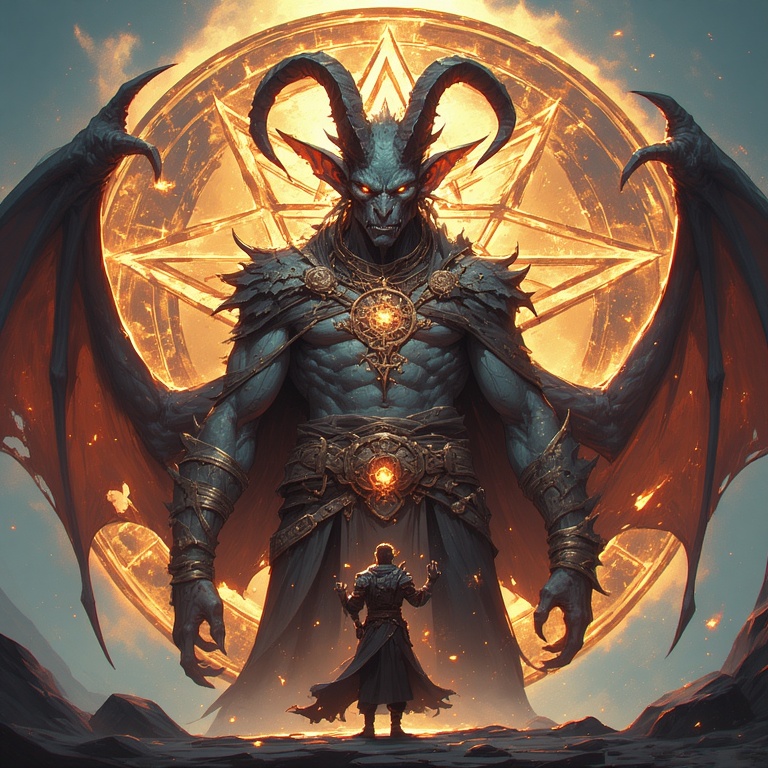
Magic changes reality.
On Yen, it is an alien thing, not part of the world, but something that enters from the outside.
There is no hard distinction between intelligence/charisma-based arcane magic and wisdom-based divine magic; both are extrinsic.
This is why wizards must memorize spells again and again: the alien magic does not come naturally to them and will not stick in their minds.
It is also why magic is confined to carefully studied rote spells, instead of flowing freely from the imagination of the spellcaster.
Meanwhile, many monsters have innate magical abilities.
Sages still debate how much of that is alien and how much native to Yen.
Is a medusa's ability to turn living beings into stone magical or natural?
How about the echolocation of the yokani?
What is the nature of the undead?
For the common people such distinctions do not matter much.
They fear and respect magic and usually give it a wide berth.
Origins
Ugokuchi priests claim that it was the god Baiku who, taking pity on the heavy toiling of the people, gave the secret of magic to them.
This incurred him the wrath of the other gods, who punished him by turning him into a dung beetle, or rather the race of dung beetles,
who spend their lives toiling with shit.
Baiku is not considered a god anymore.
Others claim it was the doing of the demon Enogu.
He did not bring magic as a gift, but as a curse, robbing hard-working people of their jobs and upsetting the balance of power.
Enogu is supposed to still roam the world, poking the fires of magic where he can, causing more mischief.
The most outrageous explanation comes from the Whitehood Ssages of Hoiru.
According to them, it was the desire of the philosopher Noboru to be able to change reality.
He invented magic, essentially the ultimate wish spell, to realize that.
By casting his wish he created magic, which enabled him to cast his wish.
Most recognize this argument as circular and dismiss it as rubbish,
yet the sages claim that the circularity is exactly what the strange phenomenon of magic is all about.
All agree that magic was not part of the original creation of Yen as a world.
It entered later, at the time of the Magic Breach.
The Bane of Magic
Because magic is so alien on Yen, practitioners of magic start to alienate from the world when they gain experience in it.
They develop mental disorders.
On lower levels the effects are minor, but on high levels they can fundamentally change people.
Each time the character gains a level as a spellcasting class, there is a chance that he/she will develop a mental disorder.
This includes the first level, except for paladins and rangers, who start gaining spells on the second level.
The semi-fighter classes can evade the curse by foregoing the spellcasting part of their growth, though that deprives them of the benefits of it too.
For classes like bards, clerics, druids, sorcerers, wizards and warlocks spellcasting is the core of their ability, so they have little choice.
The chance of the bane of magic afflicting a character is 1/4 for bards, clerics, druids, paladins, rangers, sorcerers and wizards; 1/3 for warlocks.
A mental disorder is inflicted only once per tier, so a spellcaster has a small chance of escaping such an effect completely each tier.
First tier (level 1 - 4) characters develop only mild disorders;
second tier (levels 5 - 10) characters can develop both mild and severe disorders;
third tier (levels 11 - 16) and fourth tier (levels 17+) can develop both mild, severe and insane disorders.
The character may accumulate multiple disorders, or existing ones may grow worse.
Example effects are listed below.
The effects of the bane of magic are permanent.
They cannot be cured, especially not with magic spells like calm emotions, lesser or greater restoration, or remove curse.
These either fail or aggravate the matter.
Mild
- Mild amnesia: Becomes forgetful
- Mild compulsive disorder: Feels compelled to keep meticulously clean, walk with a specific gait, counting and recounting coins or something similar
- Mild depression: Prone to periods of somberness
- Mild hallucinations: Suffers from occasional mild hallucinations
- Mild paranoia: Distrusts certain people and organizations without good cause
- Mild slavery: Listens too much to advice from an extraplanar being
- Weak anxiety: Fusses about complicated or dangerous situations
- Weak bipolar disorder: Prone to mood swings
Severe
- Addict: Becomes addicted to alcohol or another drug, overeating, or sex
- Partial sense failure: One of limited sight, hearing, smell, taste or feel
- Rage: Anger can erupt in unstrained violence
- Severe amnesia: Forgets many things, sometimes including important events
- Severe compulsive disorder: Devotes much time to compulsion, becomes agitated when impossible to do so
- Severe depression: Frequently depressed and despaired
- Severe hallucinations: Suffers from recurring hallucinations
- Severe paranoia: Suspects many people and organizations of being enemies and becomes reclusive
- Severe slavery: Is heavily influenced by advice from an extraplanar being
- Strong anxiety: Prone to panic attacks in times of stress
- Strong bipolar disorder: Manic-depressed
Insane
- Animal delusion: Thinks he/she is some kind of animal and tries to behave as such
- Complete amnesia: Memory becomes completely erratic
- Complete compulsive disorder: Completely devoted to a compulsive disorder
- Complete depression: Depressed and withdrawn almost all the time
- Complete hallucinations: Suffers from frequent and radical hallucinations
- Complete paranoia: Sees enemies everywhere, even among trusted friends and is prone to ambush them
- Complete slavery: Is fully under control of an extraplanar being
- Disordered: Compulsive liar, kleptomaniac, monomaniac, pyromaniac or complete narcissistic
- Psychopath: Has disregard for other people's lives, killing without emotion
- Schizophrenic: Mind splits in two distinct personalities and alternates between them
- Total sense failure: One of unable to see, hear, smell, taste or feel
Careers
Because of the Bane of Magic, many intelligent people on Yen are deterred from a 'career' in magic, though others are attracted to it. Some master only the lower level spells, then switch to another character class; some aim for the ultimate mastery, whatever the cost. Because of the twin couple of might and possible insanity, on Yen spellcasters are even more feared and respected than assassins. Powerful rulers crave their services but know that spellcasters can be swords with two edges.
Material components
Several spells in D&D include a pearl as a material component, which is destroyed during casting. These were introduced by the game designers to make those spells expensive. However, pearls are very common on Yen; they are used as currency. DMs should replace them with some other kind of valuable component, like rare gemstones.