


Introduction
The history of Yen is a misty story because there are few historians, most of whom are biased towards their employers, there is no global scientific community exchanging insights and many records have been lost in disasters. Despite all the headwind, there are the Chroniclers, an order of historians who are based in Hoiru. These people work tirelessly to gather legends, sagas, genealogies, eyewitness reports and anything else that may shed light on Yen's past.
Timekeeping

Small scale timekeeping on Yen is simple and straightforward. As Yen or its suns have a 90° inclination, all days have the same length. Each day is divided into 24 hours, 12 for the day and 12 for the night, just like on Earth. The people of Yen do not count minutes or seconds as they lack instruments for that. They may talk about half, third or quarter hours, but it does not get more precise than that.
Medium scale timekeeping is just as easy. There are 6 days in a week; 12 in a Tsuki-month, 18 in a Taisku-month and 36 in a 'full' month; 360 in a year. The names of the days of the week and those of a month vary greatly from region. A convenient standard is to simply number the week 1 - 6 and the months 1 - 10. Some Yen scientists call the months Early Spring, Late Spring, Early Summer, High Summer, Late Summer, Early Autumn, Late Autumn, Early Winter, High Winter and Late Winter.
On a large scale, things get fuzzy.
There is no single start date for calendars on Yen.
Different species and regions use different systems.
Some claim mythical foundation years, others trace back the years through the reigns of kings.
The simplest system is that of the Chroniclers of Hoiru, which is used in the text below.
As the first year in their count, they use the year that the library was founded.
That year is number 0, not 1.
Years after are 'Hoiru Count' (HC), years before 'Before Hoiru Count' (HC).
From there they count both forward and backward in a straight series.
For long timespans they use "nentse", a period of 144 years, sometimes divided into 12 "daini" of 12 years.
Centuries of 100 years are not used on Yen.
To keep things simple, years are listed below as absolute numbers, neither divided into nentse, nor into centuries and decades.
Eras
The great sage Taname discerned five 'eras', a system that is still widely used by Yen historians today. Much of his work, plus commentaries and extensions by many other historians, are kept in the Great Library of Hoiru in Kaigan. NB: Many years in the Hoiru count lsited below are approximate, not exact.
The Barbarian Epoch
In the oldest era most sapient species lived as hunters and gatherers, roaming the lands as they pleased.
Some, like the telgu of the Hurannar highlands, the pn'umnaimen of Edyrne and of course Ordh'inagei restricted themselves to one region,
while others like iihh, tarhar and weka roamed wide and far.
The simi and thref were confined to their homelands by the raging seas around them.
In this time there were no strong hierarchies, no permanent settlements, no states.
Also, there were no historians active at the time, so the history of this time remains shrouded in darkness.
What comes down from it are stories and legends, transmitted orally.
Most concern the deeds of gods and goddesses, of heroes and legendary creatures.
The Great Spread (720 BHC - 432 HC)

The simi of Yamato, being a curious race, knew about the lands to the west of their island from the tales of the iihh, who rode the winds to their land.
However, the rough waters of the Umi wrecked their little boats when they tried to cross the sea.
Over time simi seacraft improved and their primitive galleys and boats with square sails developed into seaworthy vessels with keel and cutter rig.
Using these ships, they mastered the sea and poured out onto mainland Yen.
First Kaigan was colonized, then the lands further west.
The simi brought things that the peoples of the mainland had never seen: bronze and iron tools and weaponry, and stone buildings.
Their settlements steadily expanded westward, limited only by their numbers and the terrain.
Simi were forest dwellers who avoided open terrain at first, but later adapted to it.
Meanwhile, the telgu of the highlands and the tarhar of the steppes adapted too, copying many things from the simi.
Only the weka resisted, tolerating no competition to their hunting.
But their strength was no match for the numbers and technology of the simi, who steadily pushed them back.
Ironically it was a simi sage, Konrann of Svetl, who interbred weka with other species and created the wekalai, it is said in 98 BHC.
The new race of cat-men sided with their ancestors and fought back against simi, halting their expanse around the Shihoshi and Hashi areas.
Since then some simi have managed to explore further west, but they are not welcome there
and are actively hunted by weka and wekalai, the fauna of the Wirrah swamp and Edyrne.
Unlike the simi the weka tolerated the telgu, especially after the ushgin / komchan trade got underway.
Many telgu settled in the Tlallii highlands and carved out a second homeland there.
The tarhar were widespread before the arrival of the simi and gradually gave ground, mixing among them rather than fighting them as the weka did.
Other species had been limited to single areas but now started spread out also, establishing themselves among the simi: telgu and even thref, who employed the simi as ferrymen.
Pn'umnaimen too fanned out from their home island of Edyrne.
The skies were and remain the domain of the iihh and the seas that of the surume;
the underground of the yokani, though a few adventurous simi ventured into the depths.
The Age of Empires (432 HC - 1167 HC)
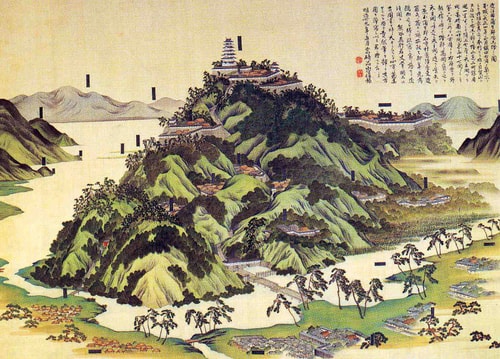
The resistance of the wekalai against the simi expansion and their counteroffensives forced the simi to organize themselves in larger groups too.
In Shihoshi, in 56 HC, they established the first territorial state on Yen, Suzaki.
Unlike the tribal organization that had been the norm before, Suzaki grouped all simi in the region together in a hierarchical state.
From the capital Kagomori large armies could just reach its borders in three days marching, fight enemies for one day, rest one day more and march back in another three days.
The might of these armies was such that they could drive weka and wekalai raiders back again and again.
Also, the simi started to build a string of forts, manned by permanent garrisons, to guard the borders themselves.
Suzaki used its might not only to defend, but also to raid themselves.
In response, simi in neighboring regions adopted the state model too.
The dense forests of Hashi limited that region to smaller city states, which warred frequently among each other.
The same held true for Yarega, Olenyak, the Narkush mountains, Nkala and Kaigen.
The terrain of the Siir, Hardanger, Byrnal, the Yrgiz Steppes and of course Tuarantu and Taimur was even harsher, so these regions remained tribal.
In the west the weka remained fiercely independent of outsiders and each other.
They never formed a state but frequently banded together for raids and also defence against counterattacks.
From 578 HC to 602 HC king Okohana of Bō-ko transformed his kingdom.
He implemented a heavy tax system, adopted ugokuchi as state religion, expanded the army and started subjugating neighboring city states.
Within a nentse he and his successors managed to expand their kingdom to all of Yamazui and surrounding lands, and established Kumo Tei, the Spider Empire.
Their kings called themselves emperors and nobody could deny them that title.
Meanwhile, in the east this example was emulated by the kings of Inose, who united Kaigan under one banner, the Kumagaya kingdom.
This was established in 699 HC.
Both states were militaristic and expansionist.
They battled each other and surrounding regions like the Narkush mountains, Hardanger, Hashi and even Yamato itself.
Tarhar nomads from the Southern Yrgiz steppe were all too happy to act as mercenaries for both sides.
It was in this period that a group of tarhar women, fed up with the dominance of their men, rose up against them and started the Screaming War.
This lasted from 886 HC to 918 HC, when the women carved out a gynocracy in the north Yrgiz steppes.
Meanwhile, the continuing strain of the wars between the southeastern states grew too heavy for the economy and the people of Kumo Tei.
Several states declared their independence: Fadente in 1002 HC, the Rena Fist in 1016 HC, the tribes of Nkala 1020 HC,
followed by several smaller states in Yamazui itself.
Kumagaya could have taken advantage of the situation, but instead turned east and invaded Yamato, hoping to create a single ancient simi empire.
After initial successes, the clans of Yamato rallied, drove out the invaders and counterattacked, until Kumagaya too fell apart in city states once more.
Historians regard the sack of Hoiru by the Yrgiz nomads in 1083 HC as the final end of the Kumagaya kingdom.
The Mortal Era (1167 HC - 1413 HC)
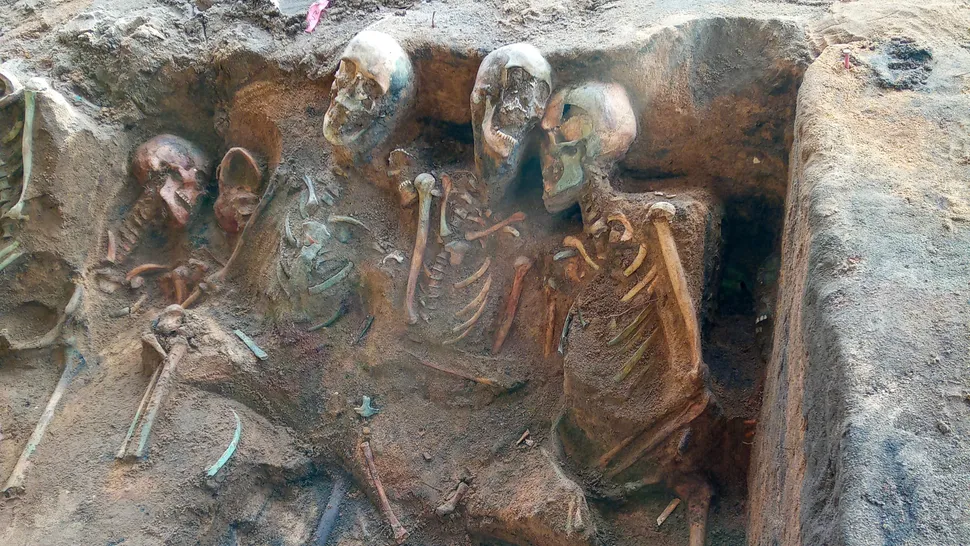
In 1167 HC a disease that was called the Naked Plague started to spread from Shihoshi, raging over all of Yen in a few years.
It caused hair loss, dehydration and often death among the simi.
Possibly half the population of the eastern half of Yen died.
Only the Dzartak theocracy in the Olenyak region escaped without much trouble.
Many said that the plague was engineered by Dzartak mages, though they claimed they only warded it off.
Other species, especially the weka and wekalai from the west and the tarhar in the east, took advantage of simi weakness, raiding far and wide and enslaving simi survivors.
Simi empires and kingdoms broke down under the pressure, dissolving into petty states.
However, the attackers made no attempt to replace the simi, who eventually recovered.
They re-established some states and founded new ones, restoring the balance after about a generation.
Suzaki, which had been half-heartedly annexed by the Dzartak theocracy, regained its independence;
Kumo Tei grew in size again.
During the Naked Plague many tarhar had spread over southeast Yen and their wealth and power had grown.
It was in the aftermath of the epidemic that khan Baykanid united the Southern Yrgiz nomads under one banner.
Around 1242 HC he created the Mizdah empire, named after his clan.
It was said that his royal tent was large enough to house three score people and was so massive that it could not be moved.
The Mizdah used their might to collect heavy tolls and to raid all over east Yen.
They even subjugated the tribes of the Northern Yrgiz, much their chagrin.
But Baykanid's successor grew increasingly despotic and decadent, spending more time in palaces in Heshajey than on the harsh steppes.
Within half a nentse the empire fragmented and lost its power.
The Naked Plague caused a fundamental shift in philosophy and religion. People, especially the simi, became acutely aware of their mortality. Around 1250 HC, one Nairu of Yoseino in the north of Yamazui started to preach a new creed, which was later called Nairukyō. It stated that afterlife was (far) more important than actual life. The new faith appealed to many and spread over large areas of Yen. In some places, especially Heshajey, the priests took over the government and devoted the resource of the state to preparation for the afterlife. They repeatedly clashed with 'pagan' simi and all other sapient races in religious wars, a novelty on Yen up to that time. Nairukyō never spread to the simi homeland of Yamato, where the emperor did not tolerate temples interfering with the traditional aristocracy.
The Age of Magic (1413 HC - 1967 HC)

Magic first entered Yen somewhere in the city of Fushi in Yamazui in 1413 HC.
Rumors started circulating of a secret cult that operated underground, manipulating the upper classes like in Heshajey.
But this 'cult' did not stay underground, they took over power in Fushi, establishing what was basically the world's first magocracy, the Ring of Eight.
This breakout is called the Magic Breach, the moment that magic entered Yen.
At the time, the number of spells known to the mages was still rather limited.
Over the course of several nentse they developed / discovered more and more powerful spells and spread magic ("fujutsu" in Go) over the world.
The mages brought magical beings from outside Yen as servants.
Many of these broke loose and spread over the land on their own account.
Meanwhile, the magical empire grew too, at its height dominating almost the entire eastern half of Yen.
The brief reign of archmage Kuto-urufu (1805 HC - 1809 HC) is often regarded as the zenith of the empire, when the most potent spells were mastered.
By then people had learn to acknowledge the Bane of Magic.
It affected the most powerful mages the most, giving rise to several archmages who were totally insane.
The unstable government tore itself apart and the empire of the Ring of Eight crumbled.
In 1913 CE the pyromancer Kikkineth burned down the Tower of Heavens in Fushi, which was the deathblow to the magic empire.
But the mages recovered somewhat and Fushi remains the center of magic learning until this day.
Somewhere during the Age of Magic the civilization on the island of Koh in the far southeast perished in a great cataclysm, the nature of which is still a mystery. That civilization and indeed the entire island must have originated not long before, because there are no accounts of simi sailors of its existence before that time. Yet explorers have confirmed that some ruins on Koh are several nentse old. This contradiction still puzzles scholars. Some have speculated that the island has only somehow moved in from further out in the Umi, which would be unprecented. Others have more extreme theories, stating that it must have come to Yen through another time. Whatever the real explanation, Koh remains with Yen for now, barren and depopulated.
The Duchy of Apéthantos was established in 1633 HC, after the devil Apéthantos came to Yen. This devil used slaves, prisoners of war and undead to build massive armies and conquer Hashi, Shihoshi, north Techlaltho and most of the Siir in just 14 years. In response weka, wekalai and simi united in a rare coalition of races and defeated him in the War of the Black Sky in 1654 HC.
States
Throughout the known history of Yen, a small number of large and mcuh greater number of small states have been established. Some have perished, some have risen several times in different forms and some endure to this day. The major ones are/were:
- Suzaki was the first true state on Yen, estsblished during the Age of Empires. It broke down during the Naked Plague but was quickly re-established afterward and still exists. Its core region is Shihoshi in the north.
- Further north, in Olenyak, another state rose up early, bound together not by military but by religious means: the Dzartak theocracy, practicing Dzartakshüt. Sometimes it subjugated Suzaki, north Yrgiz tribes or the west of the Narkush mountains, aiming to exact tribute but not to convert people to their religion. At other times it has been defeated and subjugated itself, always to regain independence sooner or later.
- The Ducato di Rena is a duchy that dates back to the Great Spread. It has been raided by Byrnall, conquered several times by Kumo Tei, but always regained its independence. It is still an independent unified state today.
- The largest and most powerful state on Yen established itself in Yamazui, centered around the capital Bō: Kumo Tei, the Spider Empire, named after its grand palace that stands on countless poles in the swamp. Kumo Tei used and uses a river fleet and army of marines to spread its influence through Yamazui. It is closely tied to the ugokuchi faith and frequently levies a blood tax on its citizens. The power of Kumo Tei always waxes and wanes, at its peak encompassing all of Yamazui and beyond, but sometimes shrunk to little more than a city state.
- The Kumagaya kingdom united Kaigan during the Age of Empires. It was a bitter rival of Kumo Tei and fought many wars with it. When the armies of Kumagaya invaded Yamato, this caused such a backlash that the kingdom fragmented, never to rise again. Its capital Inose, only a few hours walking from modern day Hoiru, is now a ruin.
- The Fadente republic was established during the Age of Empires, when Kumo Tei weakened and the islanders decided to declare themselves independent. Like before the domination by Kumo Tei, a king was installed, but both he and his son antagonizes the people so much that they deposed them and created a republic, which lasts until this day.
- The South Yrgiz steppe nomad Mizdah empire rose up after the demise of the simi kingdoms during the Naked Plague. For a short while it ranged supreme ofver most of the eastern half of Yen, but then collapsed under its own decadence.
- The Ring of Eight was established in Fushi, east Yamazui, during the Age of Magic. At first, it had a monopoly on magic and with it established a vast empire that spanned alsmost half of Yen. When magic become more common and widespread and infighting among the high mages became endemic, it fractured and shrunk back to the size of a city state.
- The Duchy of Apéthantos was established in 1633 HC, after the devil Apéthantos came to Yen. It was a theocracy with the devil as god-king, where lives had little worth. It lasted only 21 years, until 1654 HC, when it was brought down in the War of the Black Sky. Apéthantos' capital of Bzarogh at the border between Hashi and Shihosi is now a ruin.