


Introduction
Like any D&D world, Yen abounds with many types of creatures, some magical or mythical, some natural, some in between. Many come from Earth mythology or modern fantasy. Details on those can be obtained elsewhere. Species that are unqiue to Yen are described below. Many attributes and numbers are specific for D&D. These can be translated to other RPG systems.
Player species
Players cannot play a character who is a member of the standard D&D races: humans, halflings, elves, half-elves, dwarves, gnomes, half-orcs and certainly not aberrations like dragonborn, tieflings, goliaths or aasimar. None of these species exist on Yen. Some magical species like minotaurs, ogres, rakshasa and the like do exist but are strongly discouraged as player races. Instead, there is a different set of species that can be played:
Simi
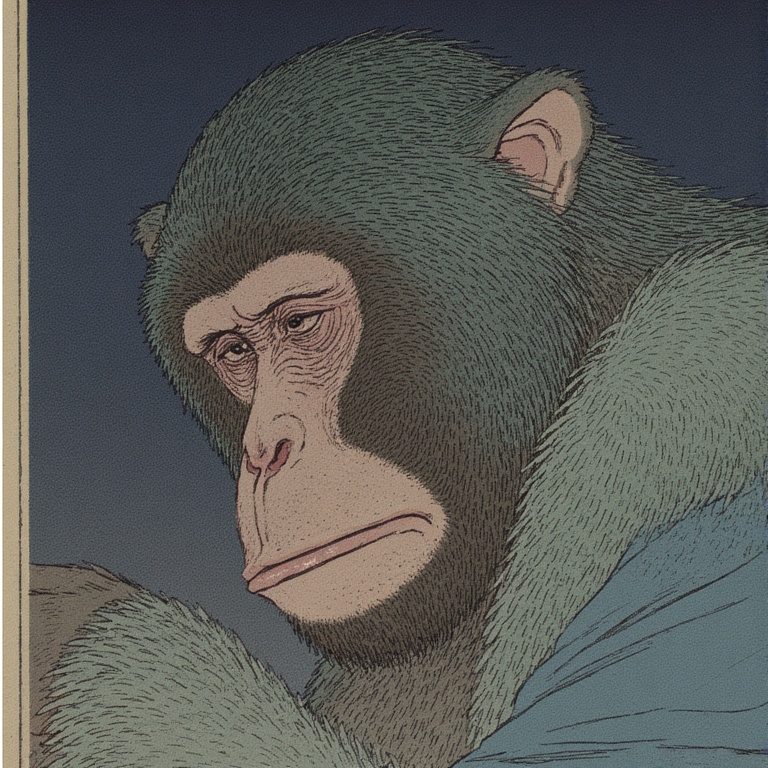
Simi are the most common sapient race on Yen.
They are ape-like, originally tree-dwellers with very good climbing ability, who look more like bonobos than humans.
They can walk on their knuckles or upright, just like apes, but do not have human long distance bipedal running capability.
Simi are slightly smaller than bonobos, men weighing 45 kg on average and women 40 kg.
Their fur is short haired, in various shades of green and brown, not black like bonobos.
Regarding mouth, nose and teeth, they are somewhere between humans and bonobos, snout neither fully flat nor extending far.
They have large, sensitive ears.
Overall simi are an inquisitive and enterprising species.
They originally evolved on Yamato, but have spread to many other areas.
Today they are the most numerous sapient race on Yen.
In some places they have developed advanced cultures with stone cities, deep labor specialization, and elaborate hierarchies.
Size: Small
Speed: 30 feet
Ability scores: +1 Dexterity, -1 Strength
Traits:
- Forest climber: Proficiency in the Acrobatics skill.
- Skill versatility: Proficiency in two skills of choice.
Tarhar
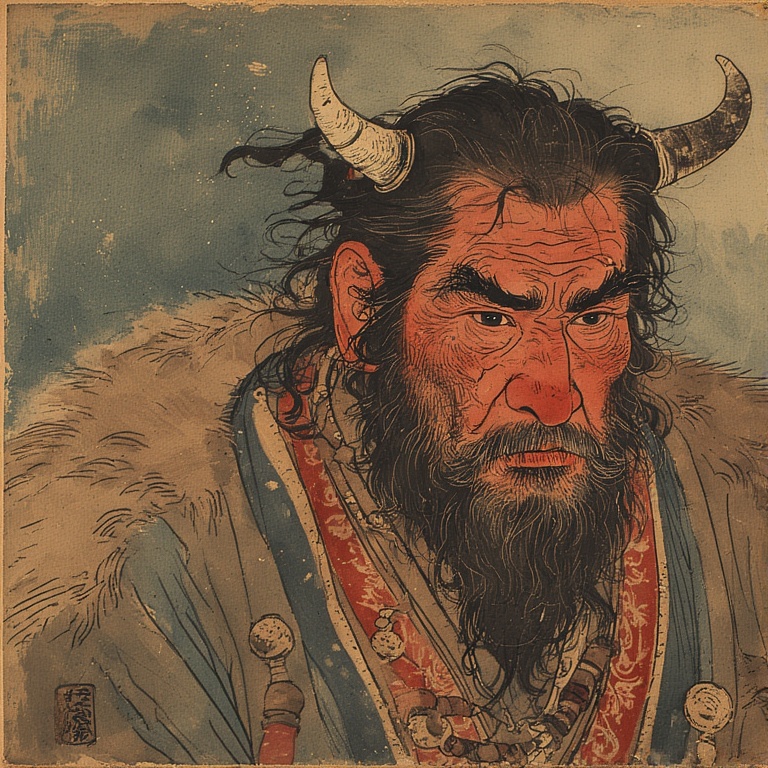
Tarhar are the Yen race that resembles humanity the most.
They are more hairy than humans but much less than simi.
The average tarhar man stands about 1.75 meters high and weighs 85 kilograms; a woman 1.65 meters and 65 kilograms.
They walk on two strong legs and have two small horns on top of their head.
These can point slightly forward, backward or sideways.
The horns make wearing helmets difficult for them.
Among tarhar there is less variation in skin and hair color than among humans on Earth.
Maybe because the three suns don't shine so fiercely, most tarhar are light to light brown skinned.
Hair is straight or wavy, most often black, but brown, blond and red also occur.
Ancient tarhar hunted on the steppes, mostly by running their prey down.
Nowadays, they ride horses and shoot arrows.
Also, they have spread to other areas of the world.
They are slightly less intelligent than most other sapient races, but hardy and tough.
They are frequently employed as mercenaries.
Size: Medium
Speed: 30 feet
Ability scores: +1 Strength, +1 Constitution, -1 Intelligence.
Traits:
- Great runner: Advantage on all running endurance checks.
- Menacing: Proficiency in the Intimidation skill.
- Nomad: Proficiency with one of the following skills of choice: Animal Handling, Javelin, Longbow, Medicine, Nature, Perception, Shortbow, Stealth, or Survival.
Telgu
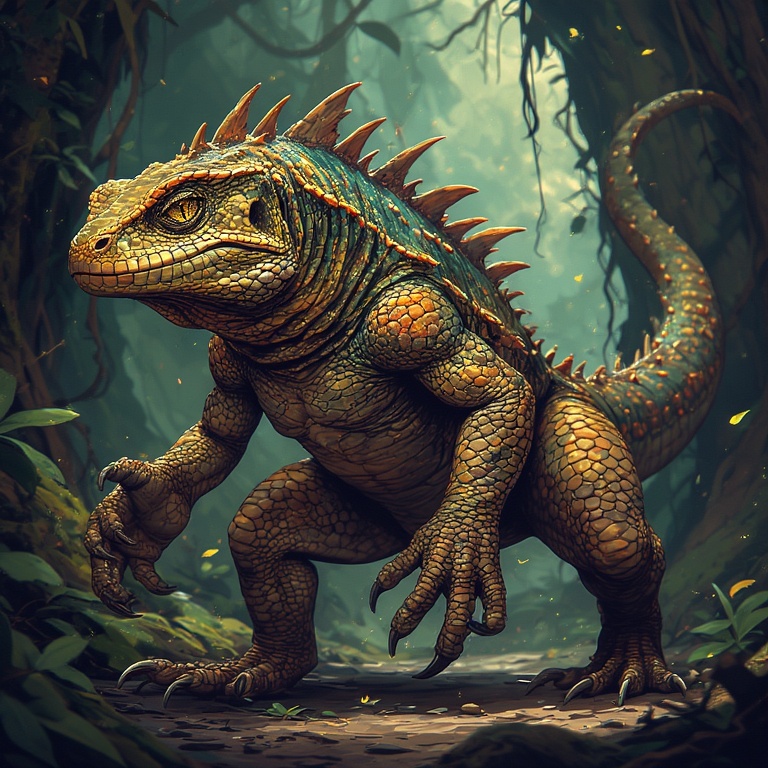
The telgu are lizards: scaled reptiles.
They can walk upright, but with some difficulty, as their arms and legs are set at the sides of their body, not under / before them.
Therefore, they either walk with in a funny waggling way, or run on all fours.
Telgu may look like stupid lizards, but are as intelligent as simi.
Telgu evolved in the Hurannar highlands, known for their dry weather.
They are hardy creatures who can survive long periods of drought, fasting or cold and can regenerate nearly every part of their body, though all of these deprive them of vital nutrients.
This slows their metabolism and makes their brains sluggish, reducing them to instinctive creatures in dire situations.
When conditions improve, they can revive their physical and mental powers.
When hatched from the egg, baby telgu are the size of a small rat, but they grow to adult size, as large a sheep, in about ten years.
During their lifespan, which may extend to two hundred years, they slowly but steadily keep on growing, up to three meters in length.
With size also comes greater strength.
Telgu are ectotherms, they love warmth and become sluggish in cold.
Size: Small - Large
Speed: 25 feet
Ability scores: -1 to +1 Strength, +1 Constitution
Traits:
- Ectotherm: -1 to -2 penalty to Dexterity, Intelligence and Wisdom in very cold conditions, +1 to +2 in heat.
- Telgu resilience: Advantage on all checks regarding thirst, hunger, heat stroke, frostbite, or poison, though each failed check temporarily lowers Dexterity, Intelligence and Wisdom by 1 point, until the adverse conditions are lifted.
Wekalai
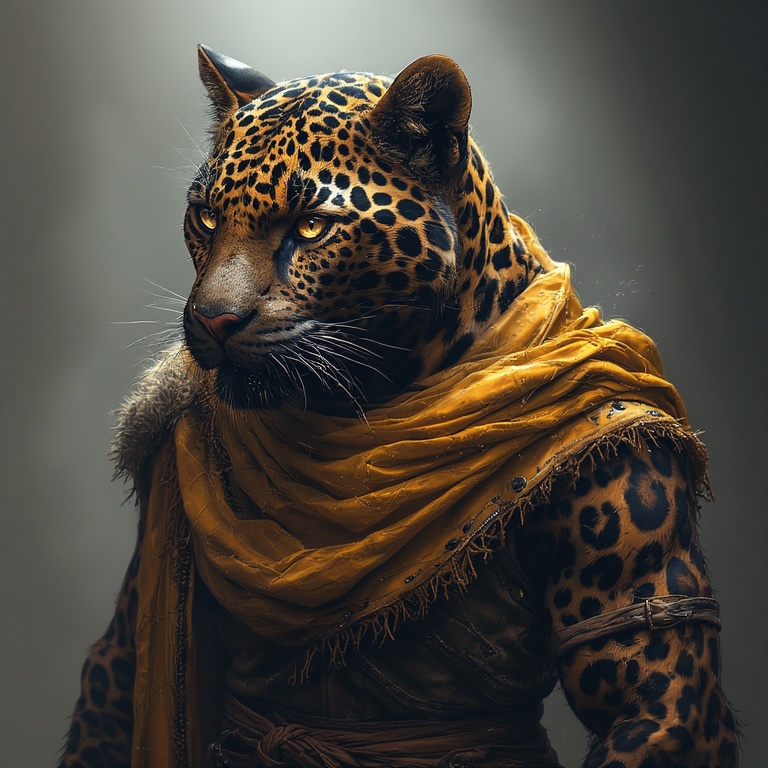
The weka (see below) are a species of feline hunters that resemble the 'big cats' of Earth.
But they are solitary hunters, unable to fight the numbers, organization and crafting abilities of other intelligent species, especially the simi.
Most weka were driven from the eastern half of Yen and would have been driven from the western half too.
Their salvation or curse, depending on how you look at it, came from the sage Konrann.
He managed to interbreed weka with other species, creating the race of the wekalai.
Wekalai are 'cat-men' who can walk upright and use their hands, or stride on all fours with their claws retracted.
Those hands retain sharp claws and are not as nimble as simi hands, yet fairly flexible nonetheless.
Their bodies are furred and their necks more flexible, so as to function well in both vertical and horizontal postures.
They are a little smaller than weka.
Traditional wekalai live in small patriarchical groups, one male with a harem of females plus children.
Other males roam the wilds solitary.
These sometimes group together in marauding bands.
Weka and wekalai often work together.
The weka consider themselves more pure than and superior to the wekalai, but often have need of their services.
The attitudes towards the weka among the wekalai range from adoration to contempt.
Size: Medium
Speed: 30 feet
Ability scores: +1 Wisdom, -1 Charisma
Traits:
- Bestial instincts: Proficiency in one of the following skills of choice: Acrobatics, Athletics, Intimidation, or Survival.
- Cat's Claws: Can use claws to make unarmed strikes for 1d4 slashing damage + Strength modifier, instead of the bludgeoning damage normal for an unarmed strike. Yet this also comes with a -2 penalty to all proficiencies that involve manual dexterity, like all toolset skills and weapon skills.
- Cat's Talent: Proficiency in the Perception and Stealth skills.
- Darkvision: Has keen senses like those of a cat. Can see in dim light within 60 feet as if it were bright light, and in darkness as if it were dim light. Cannot discern color in darkness, only shades of gray.
Other sapient species
Besides species suitable for player characters, Yen is home to several other sapient species that are unique to the world. D&D classifies them as beasts, but they are too intelligent for that, so they are listed separately here.
Iihh
Tiny Bird, variable alignment
Size Tiny
Armor Class 11
Hit Points 11 (2d4 + 6)
Speed 20 ft., fly 80 ft.
| STR | DEX | CON | INT | WIS | CHA |
| 8 (-1) | 10 (0) | 16 (+3) | 10 (0) | 12 (+1) | 10 (0) |
Skills Perception +2
Senses Passive Perception 13
Languages Common, Iihh
Challenge 1/8 (25 XP)
Proficiency Bonus +2
Actions
Bite Melee Weapon Attack: +1 to hit, reach 5 ft., one creature. Hit: 1 (1d4 - 1) piercing damage.
Description
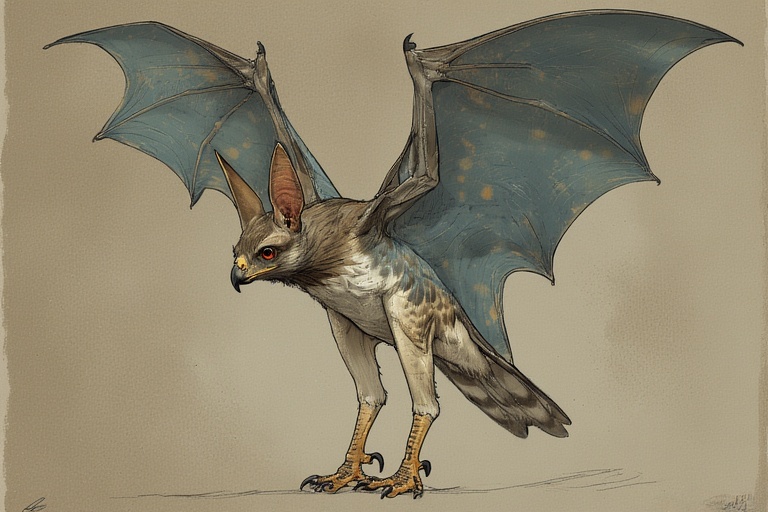
The iihh originated among the horsa trees on Iihhne.
Originally fast and nimble climbers, they have evolved through jumpers, then gliders to birds, though they have retained their front claws to cling to the trees and crawl over their trunks and branches.
They weigh 2 kilograms on average and have wingspans of around 1.5 meters, now displaying feathers instead of the original leathery skin.
Their plumage is blue below and grey, brown or green above.
Ancient iihh lived off the food that the forest could provide, but the modern species has adpated to a diet of fish.
The iihh have used their flying capabilities to spread all over Yen, though they never colonized like the simi.
They consider themselves true nomads, but no matter how far or how long they roam, they always return to Iihhne to breed and socialize.
Interacting with other species, Iihh frequently act as messengers, scouts or spies.
Nhokkur
Medium Turtle, variable alignment
Size Medium
Armor Class 16 (natural shell)
Hit Points 30 (4d8 + 12)
Speed 10 ft.
| STR | DEX | CON | INT | WIS | CHA |
| 12 (+1) | 3 (-4) | 14 (+3) | 14 (+2) | 16 (+3) | 7 (-2) |
Senses Passive Perception 13
Languages -
Challenge 1/4 (50 XP)
Proficiency Bonus +2
Actions
Bite Melee Weapon Attack: +3 to hit, reach 0 ft., one creature. Hit: 4 (1d6 + 1) piercing damage.
Description
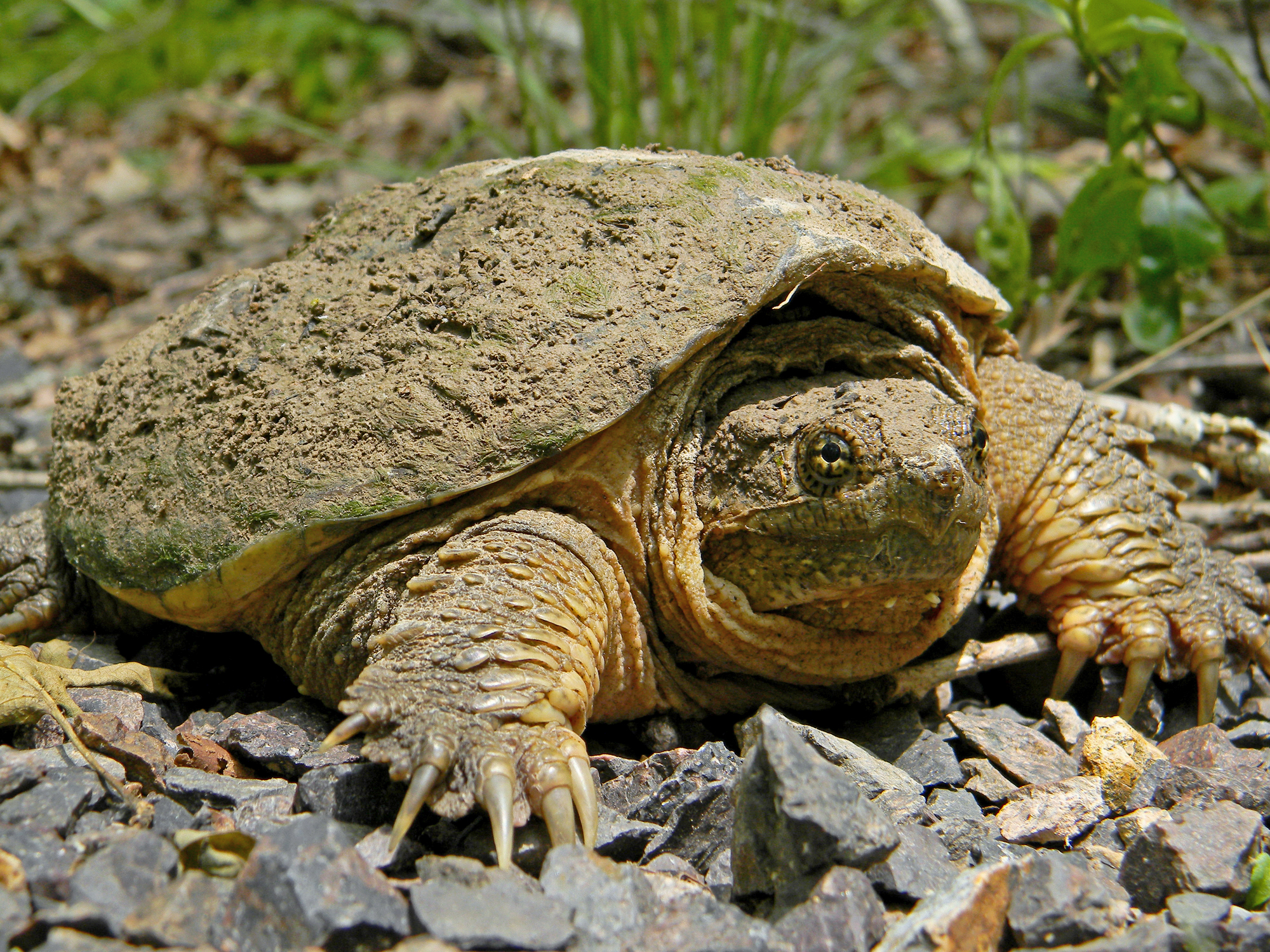
These creatures resemble common snapping turtles, being slow reptiles equipped with a hard outer shell.
Unlike turtles, they can completely seal off their soft inner body, filling the cracks in their armor with a semi-hard tissue.
Nhokkur move and grow slowly.
They sluggishly crawl around, patiently gathering a few nutrients.
They can live for many centuries and over the years slowly but steadily gain great wisdom.
Many people consider them holy and have taboos against harming nhokkur.
They are sometimes consulted for advice, but this is difficult.
Nhokkur cannot speak; instead they communicate with other races by scratching characters in the ground, which requires patience and of course literacy.
How they communicate among each other is unknown.
Worse is that nhokkur seldom care about the idle flutterings of more fleeting races and therefore rarely respond to requests.
Ordh'inagei
Enoromous Plant, unknown alignment
Size Territorial
Armor Class n.a.
Hit Points n.a.
Speed 0 ft.
| STR | DEX | CON | INT | WIS | CHA |
| n.a. | n.a. | n.a. | 25 (+7) | 20 (+5) | n.a. |
Senses Passive Perception 21
Condition Immunities almost all conditions
Languages unknown
Challenge n.a.
Proficiency Bonus +6
Traits
Magic Resistance Ordh'inagei has advantage on saving throws against spells and other magical effects.
Actions
Attack If pressed, Ordh'inagei attacks through its native fauna.
Description
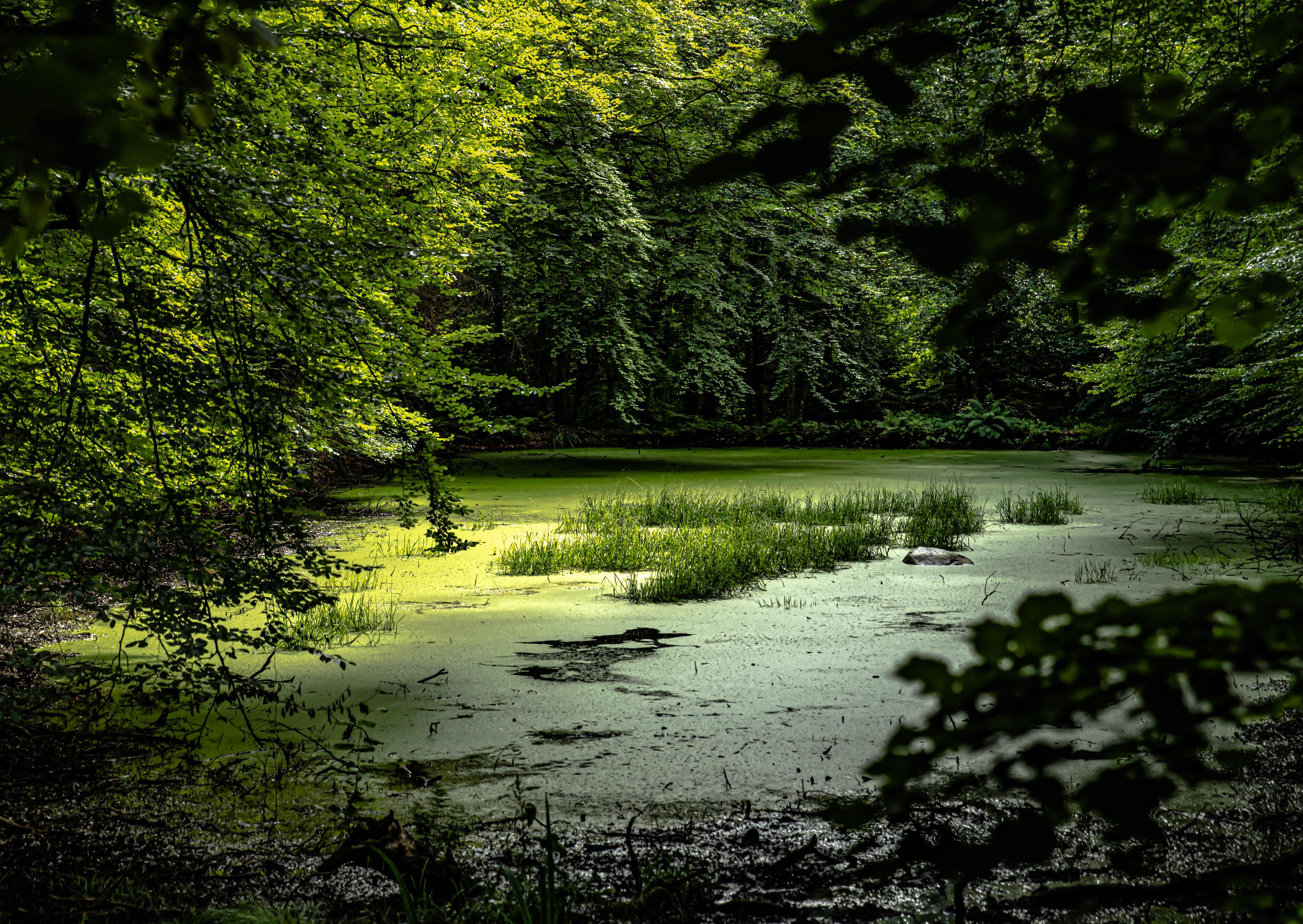
This is not a race, but a single being, a colony of plants, forming a massive cluster that spans the entire Wirrah swamp. Though vegetable, it is very sagacious and the ultimate ruler of the swamp, orchestrating all life in and around it. Because the creature is so vast, much of its brainpower is devoted in running its vast organism, so it is not so hyper-intelligent as its size suggests, though still very wise by the standards of other sapients. As a sage, it is even more valued than nhokkur, but even less prone to give usable answers.
Pn'umnaimen
Tiny Beast, Neutral Evil
Size Tiny
Armor Class 11
Hit Points 21 (6d4 + 6)
Speed 20 ft.
| STR | DEX | CON | INT | WIS | CHA |
| 6 (-2) | 11 (0) | 12 (+1) | 14 (+2) | 14 (+2) | 5 (-3) |
Skills Stealth +8
Senses Passive Perception 12
Condition Immunities Charmed
Languages Common, Pn'umnaimen
Challenge 1/4 (50 XP)
Proficiency Bonus +3
Traits
Camouflage Pn'umnaimen can change the color of their skin like Earth chameleons.
Assasinate During its first turn, a pn'umnaimen has advantage on attack rolls against any creature that hasn't taken a turn. Any hit scored against a surprised creature is a critical hit.
Poisonous When hit by the pn'umnaimen's bite or sting, the target must make a DC 16 Constitution saving throw, taking 7 (2d6) poison damage on a failed save, or half as much damage on a successful one. If the saving throw was unsuccessful, a new saving throw must be made every half hour, inflicting a new dose of damage. This stops at the first successful saving throw or when the poison is treated successfully.
Edyrne poison resistance +4 bonus on saving throws against poison. Immune to pn'umnaimen poison.
Actions
Multi-attack A pn'umnaimen makes two attacks: one with its bite and one with its sting.
Bite Melee Weapon Attack: +1 to hit, reach 0 ft., one creature. Hit: 2 (1d4) piercing damage (+poison).
Sting Melee Weapon Attack: +1 to hit, reach 5 ft., one creature. Hit: 2 (1d4) piercing damage (+poison).
Description
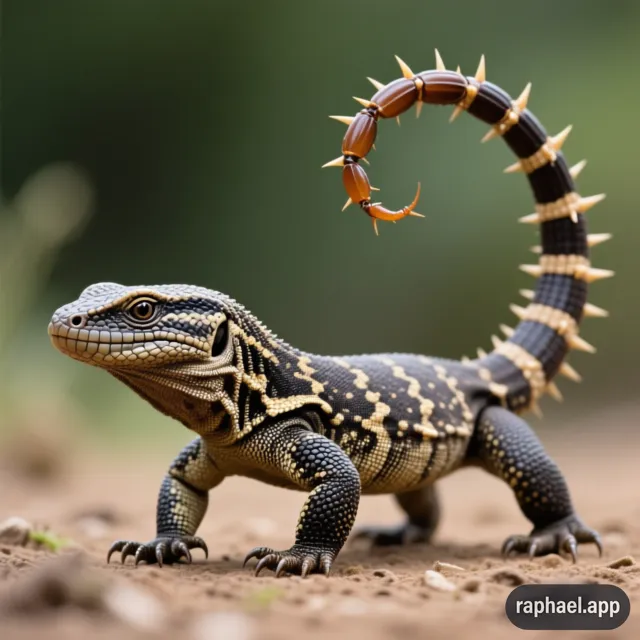
Pn'umnaimen are short, stocky reptiles, somewhat like Earth gila monsters, though much larger, weighing 4 kilograms on average with a length of 60 centimeters.
They can change the color of their skin like chameleons and are as poisonous as komodo dragons.
Their tail is more like that of a scorpion than a gila monster: not short and thick but sharp and curving overhead.
Pn'umnaimen can extend and launch it forward up to three times their body length, using its flexible tissue to stretch it to the maximum.
At the end of the tail is a tip that delivers a cocktail of poisons when it hits.
Pn'umnaimen are carnivores, hunting by stealth.
They do not hunt by poison alone but also by wit, using various tactics to lure prey and evade larger carnivores.
This race is native to Edyrne, the only species that has spread beyond the island.
The elite of the simi tolerate them as hired assassins, though the common people loathe them and hunt them down if they can muster enough courage, because the pn'umnaimen are surrounded by many fearsome myths.
Surume
Medium Beast, variable alignment
Size Medium
Armor Class 10
Hit Points 9 (2d8)
Speed swimming 20 ft.
| STR | DEX | CON | INT | WIS | CHA |
| 9 (-1) | 14 (+2) | 10 (0) | 12 (+1) | 12 (+1) | 12 (+1) |
Senses Passive Perception 11
Languages Common, Surume
Challenge 1/8 (25 XP)
Proficiency Bonus +2
Traits
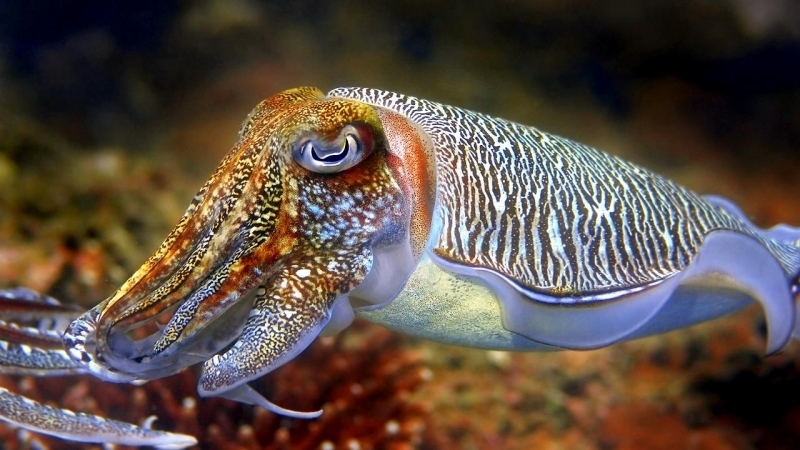
Camouflage Surume can change the color of their skin like Earth cuttlefish.
Poisonous When hit by the Surume's bite, the target must make a DC 12 Constitution saving throw, taking 3 (1d6) poison damage on a failed save, or half as much damage on a successful one.
Actions
Bite Melee Weapon Attack: +1 to hit, reach 5 ft., one creature. Hit: 1 (1d4 - 1) piercing damage (+ poison).
Description
The name surume means 'cuttlefish' and indeed surume resemble that kind of cephalopod.
They are larger though, averaging about 1.2 meters in mantle length and weighing 150 kilograms.
Surume have four tentacles attached to their heads that are about 0.3 meters long and function as arms and hands.
Like cuttlefish, they vary their color to communicate, though their language is much more rapid and complex.
They do not squirt ink like their Earth counterparts.
Instead, they use a variety of tactics like camouflage, grouping together and building shells and underwater homes to keep marine predators at bay.
Surume are the most intelligent species in the Umi.
Coastal surume live near the coast, where they have access to all kinds of food; ocean surume commute between shallow and deep waters in the Umi.
There are rumors of a subspecies that lives thousands of kilometers out from the islands, though nobody knows how they survive there.
Thref
Large Beast, variable alignment
Size Large
Armor Class 9
Hit Points 13 (2d10 + 2)
Speed 30 ft.
| STR | DEX | CON | INT | WIS | CHA |
| 14 (+2) | 11 (0) | 12 (+1) | 10 (0) | 11 (0) | 10 (0) |
Senses Passive Perception 10
Languages Common, Thref
Challenge 1/4 (50 XP)
Proficiency Bonus +2
Traits
Hold breath Thref can hold their breath for about one quarter-hour underwater, half an hour if they don't move.
Charge If a thref moves at least 20 feet straight toward a target and then hits it with a ram attack on the same turn, the target takes an extra 1d6 bludgeoning damage. If the target is a creature, it must succeed on a DC 12 Strength saving throw or be knocked prone.
Actions
Bite Melee Weapon Attack: +4 to hit, reach 5 ft., one creature. Hit: 5 (1d6 + 2) piercing damage.
Description
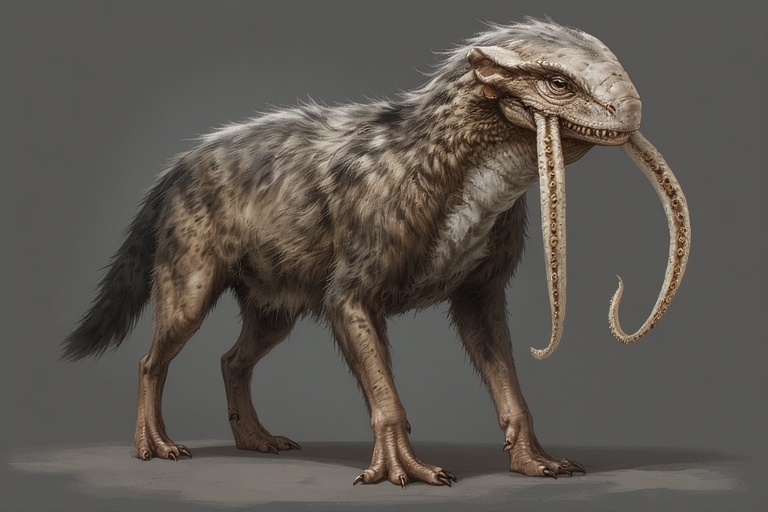
Thref are mammalian omnivores who walk on all fours.
On average, they weigh 275 kilograms, are 2.5 meters long and 1 meter high.
Their legs are completely under their body but a little to the side, like with some reptiles.
They can run fast, though only in sprints, and are poor climbers but good swimmers.
They have evolved sensory tentacles at the sides of their heads into nimble manipulators, as sensitive and flexible as a tongue, but almost as strong as arms and hands.
These tentacles play an important role during sex and socializing.
The thref are a race with three genders, native on Aesh but spread to other parts of Yen too.
Copulation is a double act: first an Uff uses 'male' semen to fertilize a Sinf, who then uses its enhanced 'double' semen to fertilize the eggs of an Enkf.
The Enkf then grows a single egg inside its womb and gives birth after about one month.
The eggs are soft-shelled, like those of amphibians.
At this stage the Sinf takes the egg in, where it developes to a foetus and is born after six more months.
The 'mother'-Sinf must be the same as the one that made the Enkhf pregnant; eggs from others are rejected by the womb.
Courtship between the members of a triplet of Uff, Sinf and Enkf is a complicated affair that can take a long time to complete and often fails.
But when it does succeed, the triplet forms a strong bond that fiercely protects its children from danger.
Its members are likely to reproduce multiple times in their lifetime, but always produce a single child per pregnancy.
Weka
Large Beast, variable alignment
Size Large
Armor Class 11
Hit Points 37 (5d10 + 10)
Speed 40 ft.
| STR | DEX | CON | INT | WIS | CHA |
| 17 (+3) | 15 (+2) | 14 (+2) | 10 (0) | 12 (+1) | 8 (-1) |
Skills Perception +3, Stealth +7
Senses Passive Perception 14
Languages Weka
Challenge 1 (200 XP)
Proficiency Bonus +2
Traits
Pounce If the weka moves at least 20 feet straight toward a creature and then hits it with a claw attack on the same turn, that target must succeed on a DC 13 Strength saving throw or be knocked prone. If the target is prone, the weka can make one bite attack against it as a bonus action.
Ambusher In the first round of a combat, the weka has advantage on attack rolls against any creature it surprised.
Actions
Bite Melee Weapon Attack: +5 to hit, reach 5 ft., one creature. Hit: 7 (1d8 + 3) piercing damage.
Claw Melee Weapon Attack: +5 to hit, reach 5 ft., one creature. Hit: 7 (1d8 + 3) slashing damage.
Description
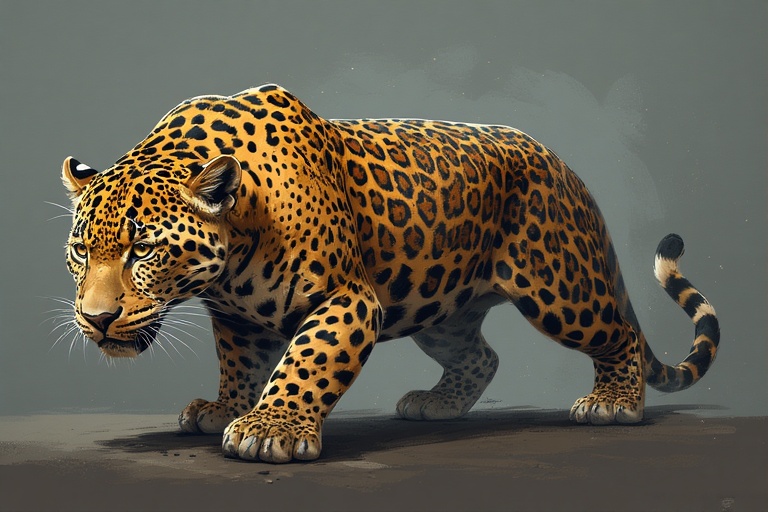
Weka resemble the 'big cats' of Earth.
They are as large and strong as an average tiger, though their spotted skin resembles that of jaguars and leopards more.
Like them, weka are ambush hunters, capable of stealth, great jumps and sprints, but lack the ability to run long and fast.
They have an entire array of natural weapons: sharp senses, stealth, speed, sharp claws and fangs, and are as smart as most of the sapient races.
The first weka stalked prey among the trees of the Techlaltho.
But they were solitary hunters, unable to fight the numbers, organization and crafting abilities of other intelligent species, especially the simi.
Most weka were driven from the eastern half of Yen and would have been driven from the western half too.
Yokani
Small Humanoid, variable alignment
Size Small
Armor Class 12 (can wear armor)
Hit Points 7 (2d6)
Speed 25 ft.
| STR | DEX | CON | INT | WIS | CHA |
| 9 (-1) | 14 (+2) | 10 (0) | 10 (0) | 12 (+1) | 9 (-1) |
Skills Perception +6
Senses Darkvision 120 ft., Passive Perception 17
Languages ??
Challenge 1/8 (25 XP)
Proficiency Bonus +2
Traits
Echolocation A yokani can't use its blindsight while deafened.
Light sensitivity While in bright light, a yokani has disadvantage on attack rolls and Wisdom (Perception) checks that rely on sight.
Actions
Light pick Melee Weapon Attack: +1 to hit, reach 5 ft., one creature. Hit: 2 (1d6 -1) piercing damage.
Description
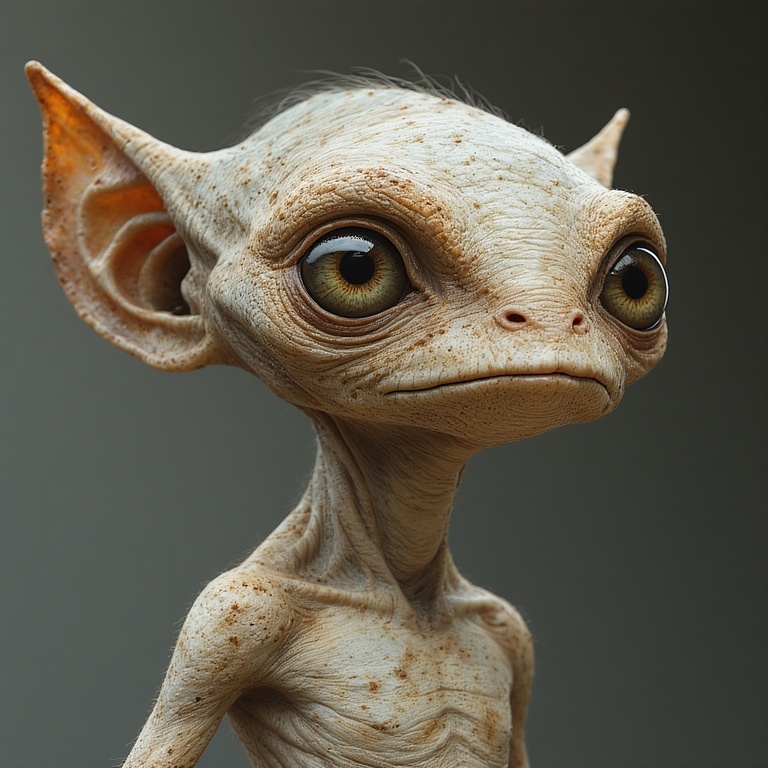
Yokani resemble simi a little with their anthropoid shape, but several differences clearly set them apart.
Their skin is white and not hairy, something that simi find abhorrent.
Both their ears and eyes are very large and sensitive and they have bat-like sonar too, making them very much at home in the dark and half-dark.
Yokani live underground, in natural caves and large tunnel complexes that they patiently carve out in the rock.
They are capable stone carvers, digging and shaping with both tools and their strong hands, which regenerate faster than other body parts.
Also, they are good metal smiths.
So if there is any equivalent to dwarves on Yen, yokani are it, though they are not stocky and have no beards.
Non-sapient species
The majority of species unique to Yen has low intelligence, good enough for animals. Some have no intelligence at all. This section lists beasts and plants.
Geygir
Gargantuan beast, unaligned
Size Gargantuan
Armor Class 6
Hit Points 62 (4d20 + 20)
Speed 20 ft.
| STR | DEX | CON | INT | WIS | CHA |
| 23 (+6) | 10 (0) | 21 (+5) | 1 (-5) | 8 (-1) | 6 (-2) |
Senses Passive Perception 9
Challenge 5 (700 XP)
Proficiency Bonus +2
Traits
Sure-footed A Geygir has advantage on Strength and Dexterity saving throws made against effects that would knock it prone.
Actions
Bite Melee Weapon Attack: +8 to hit, reach 20 ft., one creature. Hit: 24 (4d8 +6) piercing damage.
Description
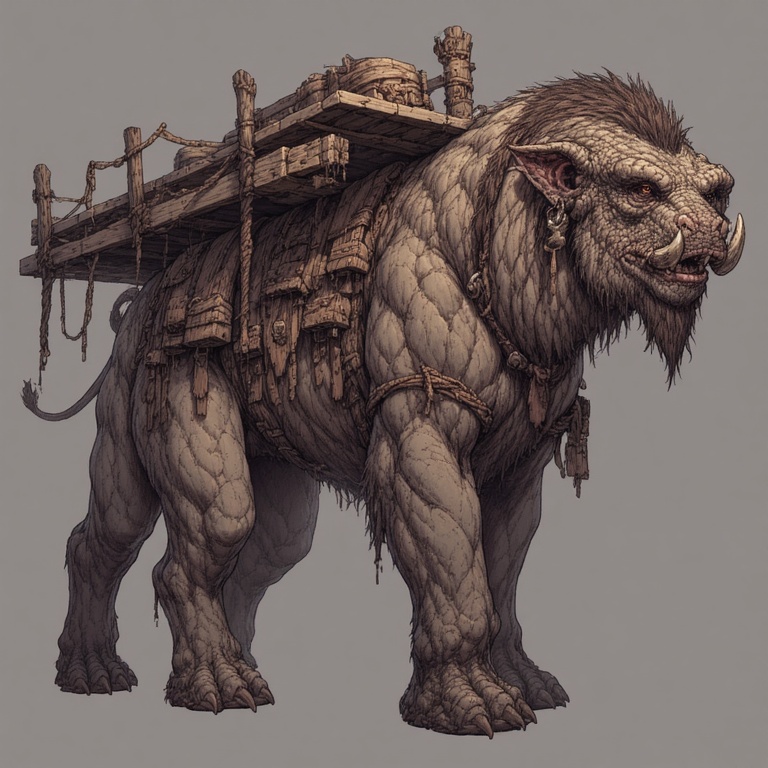
Geygir are very large mammalian quadrupeds, which graze on the steppes.
Despite their size, these animals are quite docile.
They are used as mobile homes by the Tarhar, who mount small dwellings on top of them.
Horsa
Plant, unaligned
Size Gargantuan
Armor Class n.a.
Hit Points n.a.
Speed 0 ft.
Description
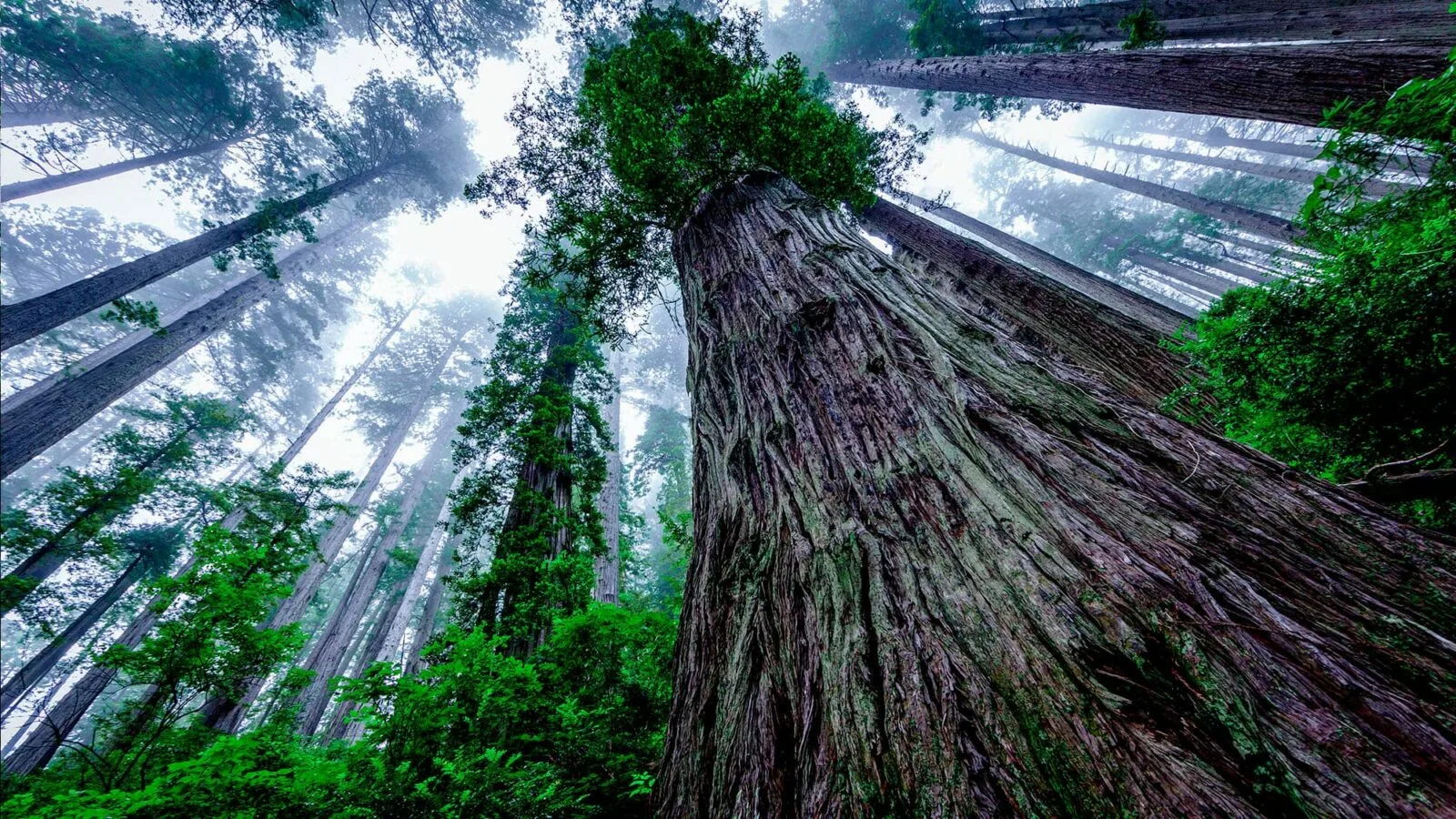
Horsa trees are very tall trees, native to Iihhne.
This land has steadily eroded over time and the trees have responded by growing taller.
Their roots reach deep down, often through the upper layers of the sea.
Their height above ground / water can be as much as 120 meters and below water level almost as much.
Almost all other life on Iihhne depends on them, including the iihh, the only sapient race.
Sonoleka
Beast, unaligned
Size Medium
Armor Class 11
Hit Points 11 (2d8 + 2)
Speed 10 ft.
| STR | DEX | CON | INT | WIS | CHA |
| 8 (-1) | 6 (-2) | 12 (+1) | 3 (-4) | 5 (-3) | 1 (-5) |
Senses Passive Perception 7
Challenge 1/8 (25 XP)
Proficiency Bonus 0
Description
Sonoleka are creatures that can grow as tall as tarhar. They are native to Ord. Sonoleka are plants in the sense that they have leaves and roots and practice photosynthesis. But they are also part animal: they can digest other plants like herbivores do. They are monopods: they can retract their roots and use their trunk muscles to hop around. This they do only when danger threatens or when food becomes scares in the place where they are. Sonoleka have no sight or hearing sense, but can smell, taste and feel. They cannot outrun herbivores, but defend themselves with spines and a noxious resin that abhors most animals.

D&D species
D&D supplies a horde of species, but not all of these are found on Yen. The list below gives an overview.
- Aberrations: Aboleths, slaadi and such are present, but rare.
- Beasts: All present except dinosaurs. Large cats like jaguars, lions, panthers, pumas, sabre-toothed tigers and normal tigers do roam Yen but are rare because they face competition from the weka. Smaller felines like caracals, cheetahs, lynxes, ocelots and wild cats are more common.
- Celestials: Are not native to Yen, but do intrude.
- Constructs: Present.
- Dragons: Present, but rare. There are no half-dragons or dragonborn on Yen.
- Elementals: Present.
- Fey: Present.
- Fiends: Are not native to Yen, but do intrude.
- Giants: Present.
- Humanoids: Not present; for Yen humanoid races see above. Lycanthropes do exist, except weretigers.
- Monstrosities: Present.
- Oozes: Present.
- Plants: Present.
- Undead: Present.