


Basic needs
Food
The diet of the peoples of Yen is varied, depending on region and associated climate.
Forest is dominant and therefore many eat forest products: fruit, nuts, berries, roots, wild vegetables.
In some regions crops like maize, rice and wheat are sources of cereals, yet forest products remain just as important.
Of course weka and wekalai eat only meat, Iihh and surume only fish.
Simi and tarhar have short gastrointestinal tracts and cook their food for easy digestion.
Other sapient species eat their food raw, except for yokani, who switch back and forth between these two methods.
Shelter
As climate on Yen is mostly regional rather than seasonal, it is quite predictable. Still its people build shelters, to shield from rain, the heat of summer or cold of winter, and from enemies. Simi constructions range from simple tree platforms to large stone buildings. Tarhar often just use caves and huts, but build lager structures too. Pn'umnaimen seek shelter under the ground; yokani live there all the time; surume are sea dwellers. The toughest species are the iihh, nhokkur, weka and wekalai, who sometimes use small temporary shelters but generally endure the outdoors.
Heating
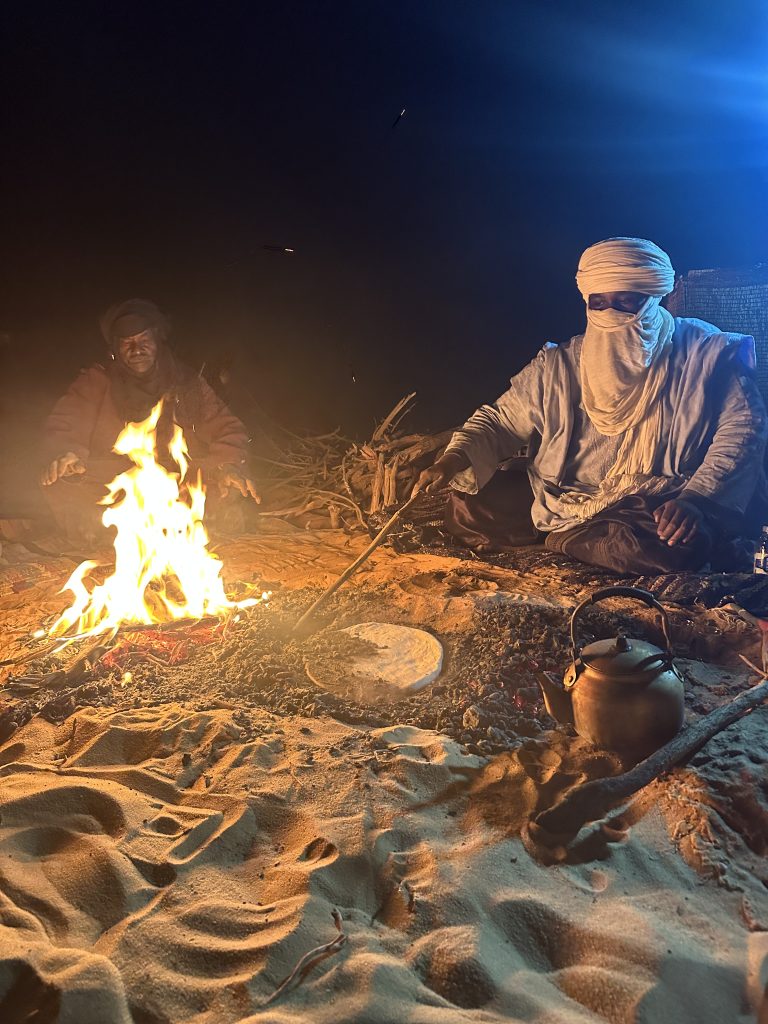
On Yen, people prefer gold to provide warmth, even in winter scarcity, as its warmth is gentle and brings no risk of fire.
As a result, the interiors of Yen houses are much less covered in smoke and soot than in Earth in pre-industrial times.
During summer, when gold is plentiful, much of it is harvested and stored in dark containers to preserve it for the winter.
Only when it is very cold, and they need high temperatures, for example for cooking or smithing, do the people of Yen turn to burning fuels.
Wood is the most common type of combustible in forest areas; animal dung on the steppes; peat and again wood in swamps.
Hygiene
Simi, the most numerous race on Yen, wear little or no clothing, but have lots of fur.
By unwritten law, grooming is mandatory among all.
They tend to their fur daily or multiple times per day.
An ungroomed simi is unhappy and/or despised by his/her fellows.
Simi groom each other and very picky about who can attend to whom.
Thus, it is also a social activity that creates or affirms interpersonal bonds.
With thref the situation is somewhat similar, though most grooming is confined to mating triplets.
The skin of other races requires less attention, but still require maintenance.
Weka and wekalai lick their fur clean;
tarhar wash themselves with water and sometimes soap;
iihne must take constant care of their skin as it contains cells that help them measure airflow.
Telgu love to take sand baths but take care not to scrub there skins bare.
They shed these from time to time, with decreasing frequency through the years.
Society
Genders, courtship, reproduction
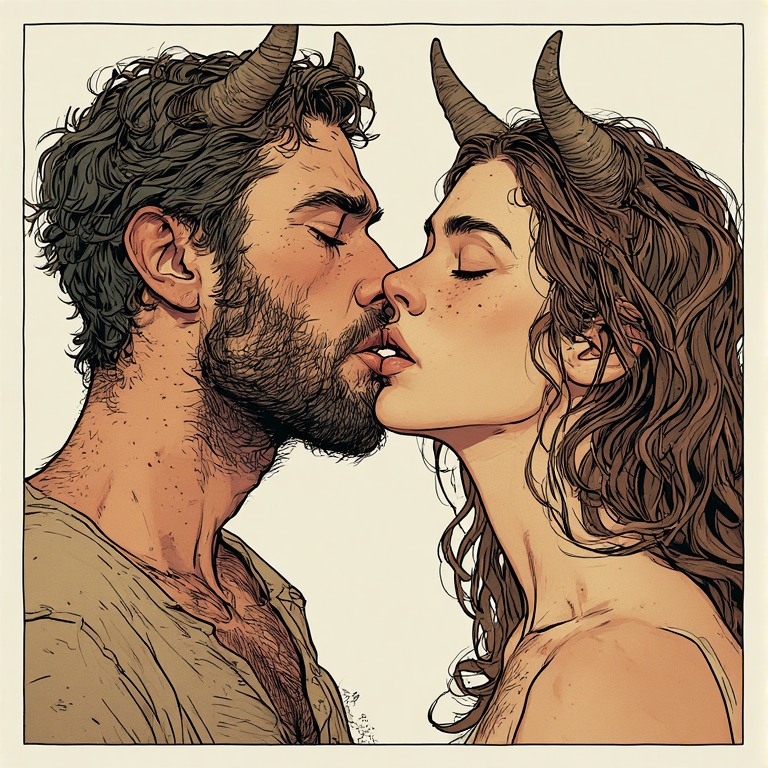
All sapient species on Yen have two genders, except the thref, who have three. See species for a description of thref triplets and their courtship and bonds. Among other species, homosexuality and bisexuality are just as (un)common as on Earth.
- Like humans on Earth, simi and tarhar are fertile all year round. Though simi look somewhat like Earth bonobos, they engage far less in sociosexual behavior, no more than humans.
- Telgu breed only once per year, in early spring. The woman lays a clutch of 2 - 4 eggs after three days, which than have to incubate for about two months.
- Epimedium, also known as horny goat weed, is known as an aphrodisiac among several species, though how much it really increases libido is unclear. What is certain is that it has a profound effect on wekalai, who get horny as hell if they consume a substantial amount of it. Strangely enough, weka are unaffected by it.
- Yokani go to great lengths to win each other's hearts, going off on adventures to prove their worth, or working hard to gain fortune. These two strategies can of course overlap. Both men and women can pursue the other; there is no bias.
- The Iihh pick partners in a complex exchange of dancing, singing and storytelling. If two iihh fancy each other enough, they form a partnership for life. Sex between them is fairly rare and only occurs on days when the three suns are in the zenith, so once per full month.
- The courtship ritual of pn'umnaimen is a dance where both potential partners engage in a mock fight, making dashing attacks against each other. Only when both are satisfied with the performance of the other, they form a couple and engage in sex. According to the sage Kazui, sex does not automatically lead to pregnancy, as pn'umnaimen are by default infertile. Both men and women need a special kind of 'poison', which does not take life but grants it, to become fertile and able to breed. This substance is created during a ritual and made available only to the most successful individuals in the competitive pn'umnaimen culture. Pairs of those breed and produce a clutch of eggs. Already in such a nest there is competition too: only the strongest chick will survive.
- Surume are fertile only for a few weeks per year. During that time, both men and women try to seek out the most attractive partner. Like with several other species, attractiveness is a mix of strength, health, beauty, intelligence and wit. Deception plays a large part. Surume often impersonate others, with varying degrees of success. Sometimes men pretend to be women to get other men to expend their semen, which is then discarded. Or women pretend to be men, to shoo off other men and pick their favorite.
Marriage, children
Marriages are common on Yen, but there are significant regional differences.
Most marriages are brought about by a mix of marrying off and romantic love.
Marrying off is dominant in the Siir and in areas where taka-Nairukyō is the main religion, as social status is very important there.
In Olenyak there is a strict separation between the priest class and the common people, who only very rarely intermarry.
In Nkala only a "yajj", a male devourer who is possessed by an animal spirit, may impregnate women, and only during a religious feast.
Man and woman do not need to be married for this, while any child resulting from such intercourse must be raised by the woman and her husband,
whether he has acted as the yajj or not.
This command is often ignored, though the penalty for unsanctioned sex is death.
Telgu do not engage in marriages, though they are selective in who they have sex with.
If a female telgu becomes pregnant and lays eggs, both parent guard them against dangers.
Weka and wekalai do not marry but partners stick together as long as they appreciate each other.
Most such relationships are monogamic; some men maintain a small harem.
Polygamy also appears with other species.
For thref, a biological match among the three partners is the most important.
All three must be 'compatible', the details of which they themselves do not even udnerstand.
Thref triplets go through a lengthy and complicated courtship ritual before they establish themselves.
Often there are many mismatches and retries with different partners before success is achieved.
Among the yokani there is little room for romantic love.
Marrying off is commonplace.
Adultery is considered a breach of contract and can bring dire repercussions from the community.
Yet it does exist and persist and the yokani have developed an entire literature branch devoted to it.
In most marriages on Yen the man is the guardian of the family and the woman rules the household. Again there are variations and exceptions. On the South Yrgiz steppe men are the bosses, while on the North Yrgiz steppe it is the other way around. Among weka and wekalai, even within the occasional man + women harems, women have an equal status to men. The same holds true for the telgu and yokani.
Most children are raised in families, like on Earth.
Some may be cared for by foster parents for a part of their youth, to get a good education.
Like on Earth in acnient and medieval times, children are considered te become adults somewhere during puberty.
In many societies this is marked with a rite of passage.
When it comes to children, the telgu are different.
Their young are raised in a commune, ranging from as small as a few families to as large as a whole village or town district.
This sounds as if the children are very safe, having many parents to look after them.
However, those parents give them little attention when they are still small.
The result is fighting among the children, mostly for food, with weaker youngsters starving or even being beaten to death.
As telgu age, they become more valuable and this competitive attitude steadily mellows.
Fashion
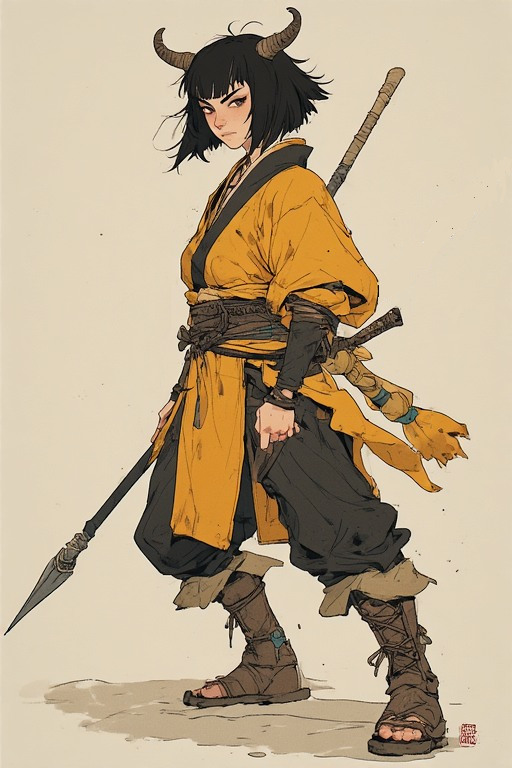
Like humans on Earth, many Yen species express their status and mood through fashion.
Of course rich clothing represents wealth, something the lower classes cannot afford.
But both rich and poor may deck themselves out in specific styles, personal or representing a group.
Thref deck themselves out with blankets / mantles, which are woven with much skill and effort.
The use them to express status, profession, intent or mood.
Every thref except the very poor has one or more of these mantles.
Spare mantles are often carried in a backpack, which in turn can become an object of fashion.
Threfs that form a triplet always have a small motif woven into the fabric that signals their unity.
Among the tarhar of the Yrgiz steppes trousers, useful in riding horses, are common among both men and women.
This habit has spread to Byrnal, Hardanger and Taimur too.
Elsewhere, tarhar usually wear tunics.
Male tarhar often shave patterns in their body hair.
These fade after a while and can then either be renewed, altered or left out.
Simi have no head hair to engage in hairstyles with, but often use body paint to express themselves.
They have to plan this for longer time periods, as paint is not so easily and frequently changed as clothing.
Much of their clothing is loose fitting, so that they can show off with it when climbing and jumping.
Functional simi clothing is much more sober, designed not to get snagged by branches.
Nhokkur do not practice fashion, while surume have enough versatility in their skin colors.
Weka occasionally use clothing, yet that is purely functional: camouflage or armor.
Iihh would like to wear clothing but cannot afford the load, though they occasionally display light necklaces.
Pn'umnaimen tend to adopt the fashion of the region where they are located, as far as possible with their quadruped bodies.
They sometimes have tailors fashion them special suits.
There are not only racial but also regional styles. The upper nobility of Hashi attach small bells to their dresses, which jingle when they move. This style is a prerogative of the high nobles, commoners and even lower nobility are not allowed to wear them. In Yamato it is not bells but color that sets the nobles apart, as they are the only ones who are allowed to deck themselves out in purple.
Environment
Architecture
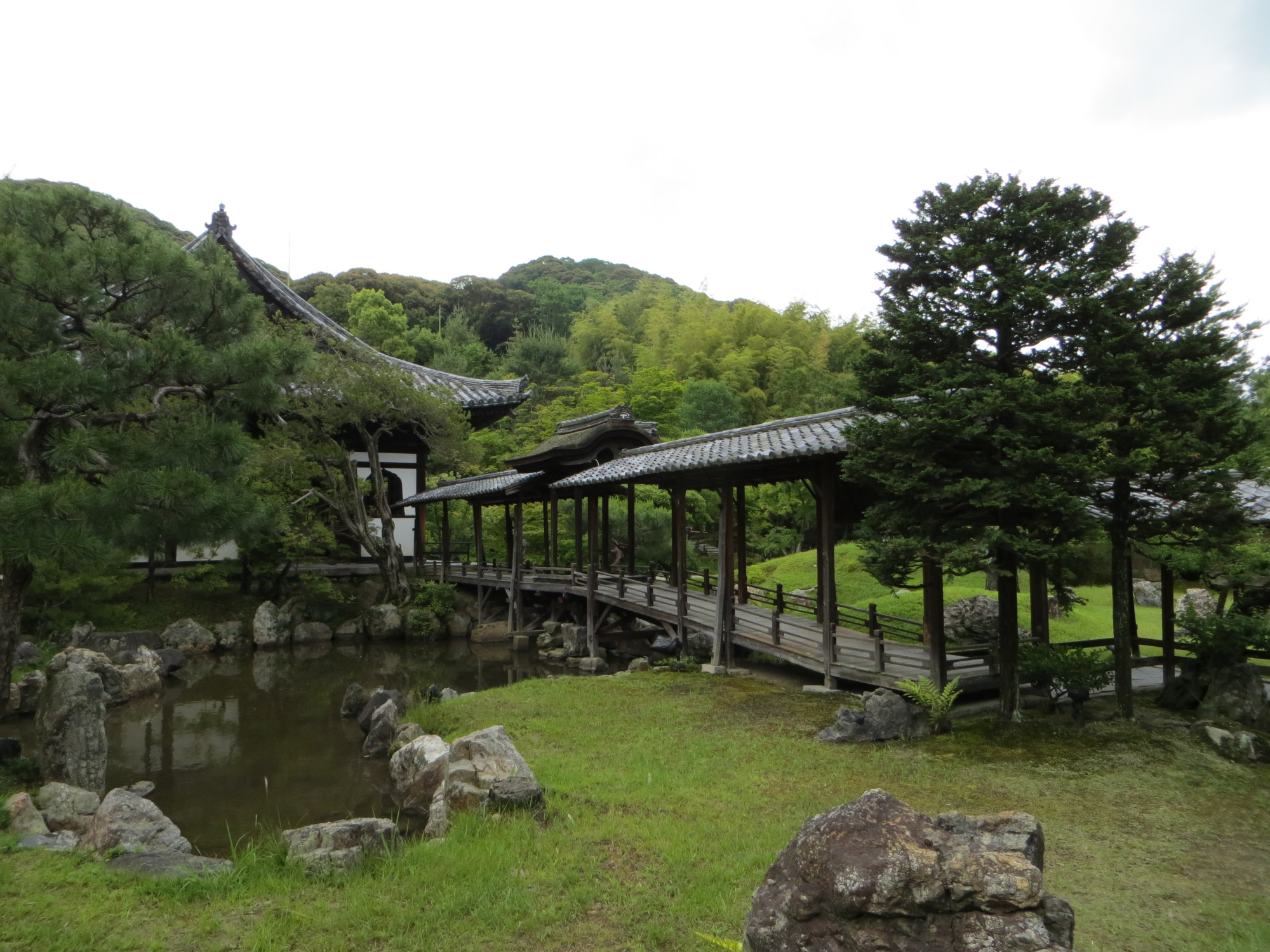
Simi are the most versatile architects on Yen. Traditional simi homes are tree huts, ranging from simple platforms to true huts with walls and roof. Over time, they started to build on the ground too and expanded the range of materials form wood and bamboo to stone. Today, stone is the preferred material for ground constructions, at least the lower parts. Simi buildings resemble East and South Asian building styles. Their architects still stress harmony between constructions and nature, so many buildings blend in with the landscape, up to the point of being camouflaged. Buildings are always adapted to the environment. For example Yamazui is full of houses on poles; Yamato and Kaigan have temples that are tucked against mountain sides like the Hanging Temple in Earth China. These contrast with the pyramids temples of Yamazui, which are clearly artificial, though the people of Yamazui make no distinction between natural and constructed hills.
Where the simi field the widest range of architecture, the telgu reach the highest. They seldom rear buildings out of nothing, but carve them out, patiently chiseling rocky peaks into shapes in high places and digging down below. The result are buildings / towns that can reach hundreds of meters in height, both above and below ground. No telgu road or field is straight, all wind around obstacles, following the landscape instead of striking through it.
The tarhar have less patience for architecture than simi or telgu. Their preferred material is wood. Many of their buildings are simple and functional, not made to last. But they take pride in wood carving and main buildings like meeting halls and temples are richly decorated.
The yokani dig out networks of underground tunnels to live in.
The use natural caves and passages when available and supplement these with their own work.
The homes of the pn'umnaimen on Edyrne too are underground.
These are simpler and less extensive and stick closer to the surface.
Of course the tunnels are smaller, large enough only to allow the pn'umnaimen.
The nomads of the Yrgiz steppe maintain only a few lackluster settlements that are populated when the need arises. These are simple structures of low dry stone walls and rickety wooden buildings. In te wilderness, such as the west and northwest of Yen (excluding Yarega), there is almost no architecture at all, just tents and makeshift shelters.
Travel
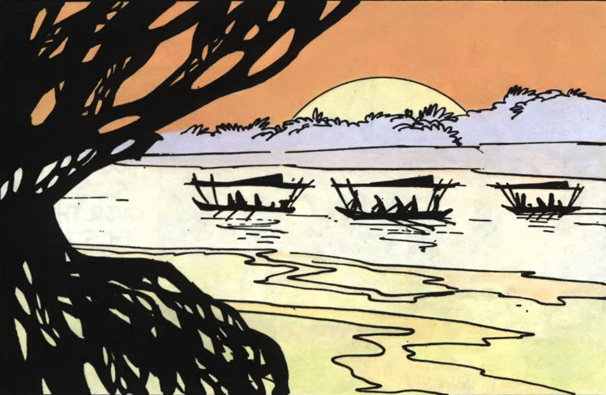
Moving around is difficult on Yen.
Many regions are forested.
Some parts a relatively open woodland (somewhat difficult terrain, 3/4 speed),
others dense forests (difficult terrain, 1/2 speed)
or even jungles (very difficult terrain, 1/4 speed).
Roads could help but are very scarce.
Exceptions to the dominance of trees are the Tuarantu desert, Taimur and the Yrgiz Steppes, plus large parts of Aesh.
Most of these are flat terrain, though the Tuarantu desert has many rocky areas and Taimur is so full of ice and snow that it is difficult terrain.
The Yrgiz steppes have caravansaries where weary travellers can rest, sheltered by sturdy walls.
However, they do not form series along fixed routes, but are scattered here and there.
In the Tuarantu desert people trek from one oasis to another.
At the oases there are water, people and all kinds of things to buy.
Many traders use rivers as transport routes, even more so than on Earth,
and adventurers do the same if they want to cover large distances quickly.
Most rivers can be tackled by boats in their lower reaches, but higher up are too narrow and wild.
Only a happy few can fly through the air: flying creatures from outside of Yen, immigrated during the Age of Magic; and of course the iihh.
Categorizations
Units of measure
Like on Earth, body parts form the basis of many Yen length units, like hands, cubits/ells (underarms). Weights too are often based on bodies: the 'belly (about 0.15 kilograms); the 'head' (about 5 kilograms). However, there are as many different variants of these units as there are intelligent races on Yen. In addition, there are regional variations; for example the Hardanger foot is slightly longer than the Yrgiz foot. People that practice agriculture have units for surface area, based on agriculture, which are of little interest to nomads, who just count the heads of their livestock. All this has led to a bewildering array of units, which will not be named here because they are too many. Travelling adventurers simply need to adapt to local customs.
Numbers
When it comes to numerals, on Earth the decimal system is dominant. On Yen, the most common system is dozenal, based on 12 rather than 10. Sages debate whether this came from the number of knuckles on the four large fingers, the number of Yai-days in a Tsuki-month, the supposed number of original Yamato clans or something else. Nobody knows for sure. All agree that it is very easy to work with when its comes to arithmetic, as 12 is divisible by 2, 3, 4 and 6.
Colors
On Yen, like on Earth, symbolic meanings are attached to colors. There is less cultural variation.
Earth and heaven colors
- "Shiro", 'white', is the color of Yai. On Yen, it stands for periodicity and travel.
- "Kin", yellow', is the color of gold. It is associated with warmth, protection and home.
- "Gin", 'silver', is the color of silver. It is associated with rain, water and fertility.
- "Kuro", 'black, is the color of night and the underground. As on Yen gold and silver come up from below, it is associated with benevolence, growth and wealth.
Day colors
- "chi" and "aka", 'blood' and 'red', are two variants of the same color. On Yen, it stands for both life and death. It is also associated with passion, lust, impulsiveness and danger.
- "Ao", 'blue/green' is the color of life, sky and seas. Here too, several variants are labeled with the same color name. It stands for nature, health and abundance.
Secondary colors
- "Murasaki", 'purple;, is the color of royalty and/or divinity. The reason for this is that purple, especially the beautiful rune purple, is very rare and expensive.
- "Daide", 'orange', is the color of fire, energy and youth.
- "Dou" and "Chairo", 'copper' and 'brown', are two variants of the same color. It is associated with toughness, resilience and old age.