


Money
On yen, silver and gold serve as commodity money with intrinsic utility value.
They are not minted into coins and seldom used for exchange.
Other metals are either too common or too rare, so metal money never took off on Yen.
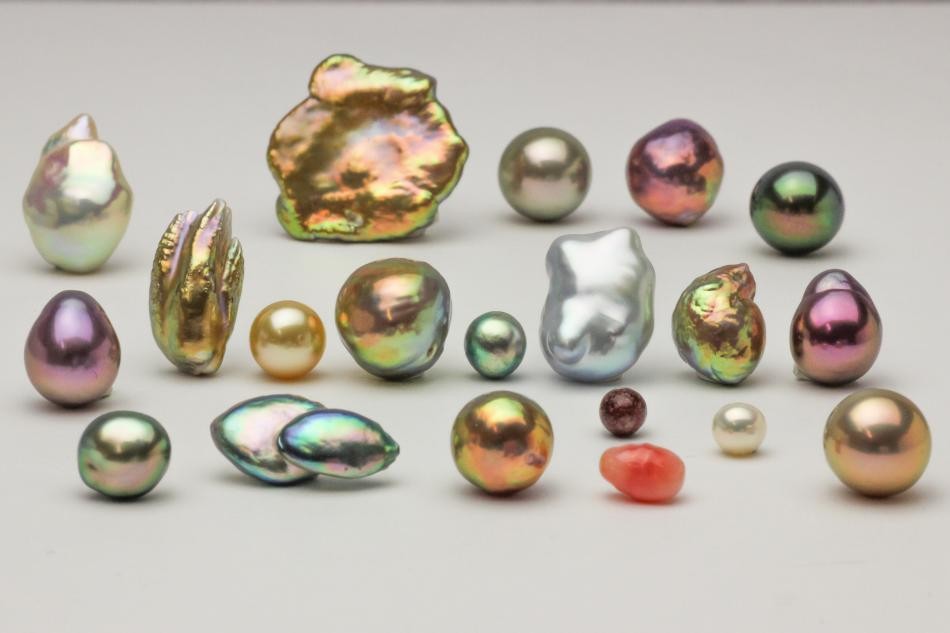
Instead, pearls have risen to become the prime monetary medium of exchange.
They are harvested from the sea and spread inland as money.
The basic pearl is the most common one: small, spherical, white, of impeccable perfection.
This is often called a "hanzen".
It weighs about as much as a coin and translated to D&D money it is worth 4 copper pieces (cp).
Other pearls are worth more, depending on the variations:
- Shape: spherical x1; semi-baroque / symmetrical x2; baroque x4
- Perfection: impeccable x1; imperfect x½; marred x¼
- Color: common (white) x1; uncommon (black, gray, blue, purple) x3; rare (pink, red, orange, yellow, green) x8
And of course size/weight; value is proportional to that.
So for example a semi-baroque imperfect orange pearl, four times larger than a hanzen, is worth 1 gold piece (gp) + 3 silver pieces (sp) + 2 copper pieces (cp) = 132 cp.
Obviously the worth of a pouch full of Yen pearl money cannot be assessed by simply weighing it.
In many places certified moneychangers handle the business of appraising pearls to determine their proper value.
Often they charge a fee, so people are loath to have money change hands too often and being appraised each time.
Food
In pre-industrial societies like that on Yen, food is the basis of the economy. Without food, everything else becomes unimportant. This is what the people of Yen are primarily after; this is what is bartered the most on the markets; this is what many they pay their taxes with.
Hunting, fishing, gathering
Most intelligent species are omnivores. Some, like the weka and wekalai, rely exclusively on a diet of meat, acquired through hunting. The Iihh are fishers, while the yokani gather underground mosses and fungi. Of all these, only the wekalai and yokani use tools and weapons. Of course simi and telgu hunt and fish too, but they eat a wider range of foods, including vegetables, fruit and other plants.
Herding
The peoples of the Yrgiz steppes practice a lot of herding. They subsist mainly on a diet of milk, flesh and occasional blood. There are domesticated animals in the forest areas, but their management is animal husbandry, not large scale herding. On Earth nomads often practice transhumance, i.e. seasonal migration back and forth between summer and winter pastures. Not so on Yen, where the fluctuation between summer and winter is global. Irregular upwelling of silver is much more important. When silver rises up somewhere, the flora reacts and blooms quickly. Nomads react quickly too, driving their herds to the fresh pastures before the rains dry up and the abundance is depleted. Very often there is competition leading to strife among them.
Farming
Though over time food production on Yen shifted more and more from hunting, fishing and gathering via herding to farming,
a large scale agricultural revolution never happened.
To simi, forest dwellers by origin, cutting down forests to make room for agricultural fields is offensive.
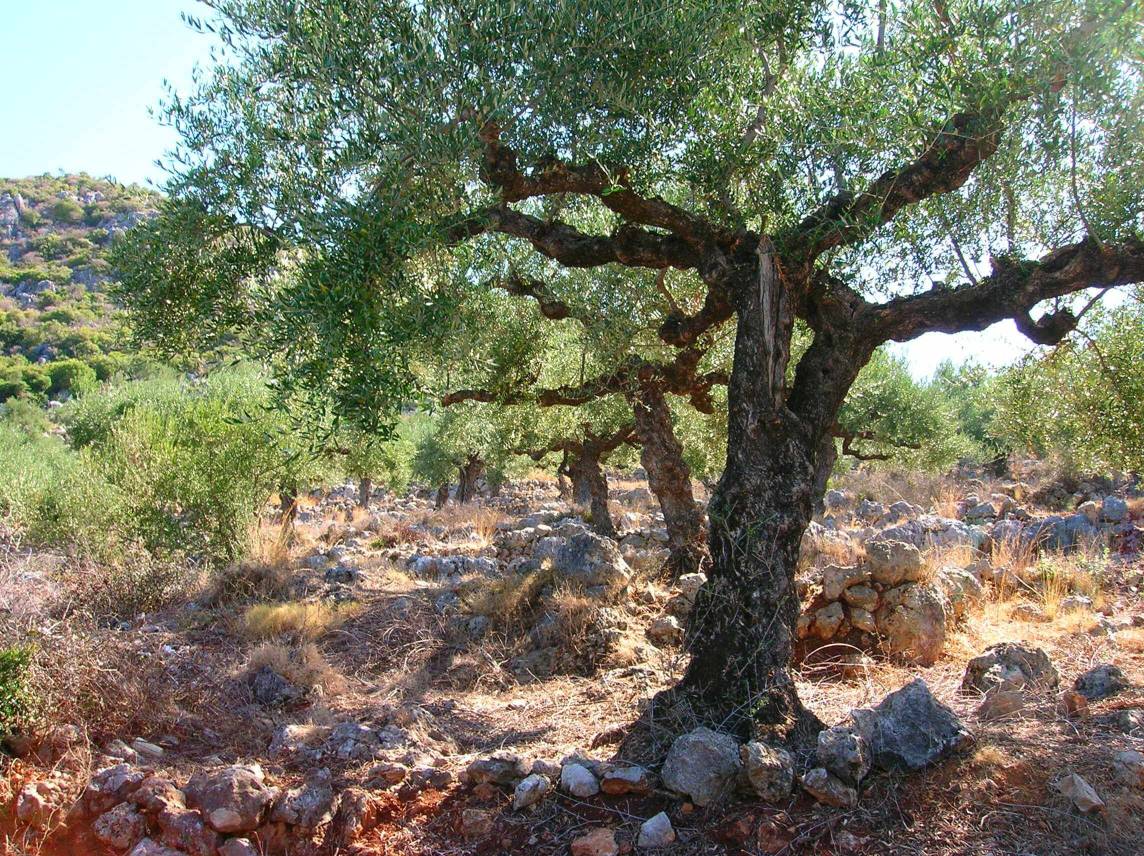
Instead of 'normal' agriculture they practice mostly horticulture and agroforestry.
Their lands are a mix of dense forest and more open woodland, containing arable fields, orchards, mixed forest and pastures.
Irrigation, ploughing and manuring are all limited.
These 'fields' yield not only cereals but also many vegetables, legumes, herbs, nuts, berries, fruit and even flowers,
while fish, poultry and grazers provide dairy products and meat.
One can find many familiar kinds of crops on Yen, but unlike their Earth counterparts they are adapted to the different microclimates.
Warmth is seasonal, but light is regular all year round and humidity is variable, so plants have developed mechanisms to attract and water when they need it and shut it out when not.
Crops whose roots would rot away with excessive rain on Earth will usually survive such wetness on Yen.
Likewise, tropical plants have adapted to seasonal temperature variation.
Most though not all are planted in spring, grow in summer and are harvested in autumn.
Craft and industry
Though the majority of people on Yen are busy with producing food, there are plenty of craftsmen. They take pride in their work and the best of them produce goods that are as much art as crafts. Many operate as independent workers, some with apprentices and there are workshops too, but no large factories.
Power
Power on yen is almost all muscle power, from workers, animals and/or slaves. This is supplemented by windmills and water mills, especially in locations where the flow of these is strong and reliable. For example there are many windmills on the border between Nkala and the Hardanger mountains and of course water mills at river sites.
Mining
Almost all the mining is done by yokani, whose home is underground. They mine stone, metals and minerals all year round. Winter is an especially busy season for them because then everybody craves the warmth of gold, most of which at that time is found only in the depths.
Gemstones
On Yen gemstones are used for decoration. The introduction of magic has created an extra demand, as there are several kinds of spells that consume gemstone dust or whole gemstones during casting. This has increased their price and led to more intense mining and trade.
Metallurgy
Smiths on Yen upgraded their technology from bronze working to iron working fairly quickly and have become accomplished metalworkers. The best iron is telluric iron from the Narkush mountains, which is exported all over Yen.
Goods
Most products of food gathering / production, craft and industry on Yen are similar to those found on Earth in the pre-industrial age. But there also a few that are unique to Yen:
Ghistt
The ghistt plant has a built-in fermentation system that produces juice with a high alcohol content, up to 30%. It is very popular with boozers all over Yen, but is very picky when it comes to soil and climate. It grows only in the northern parts of Olenyak.
Rune purple
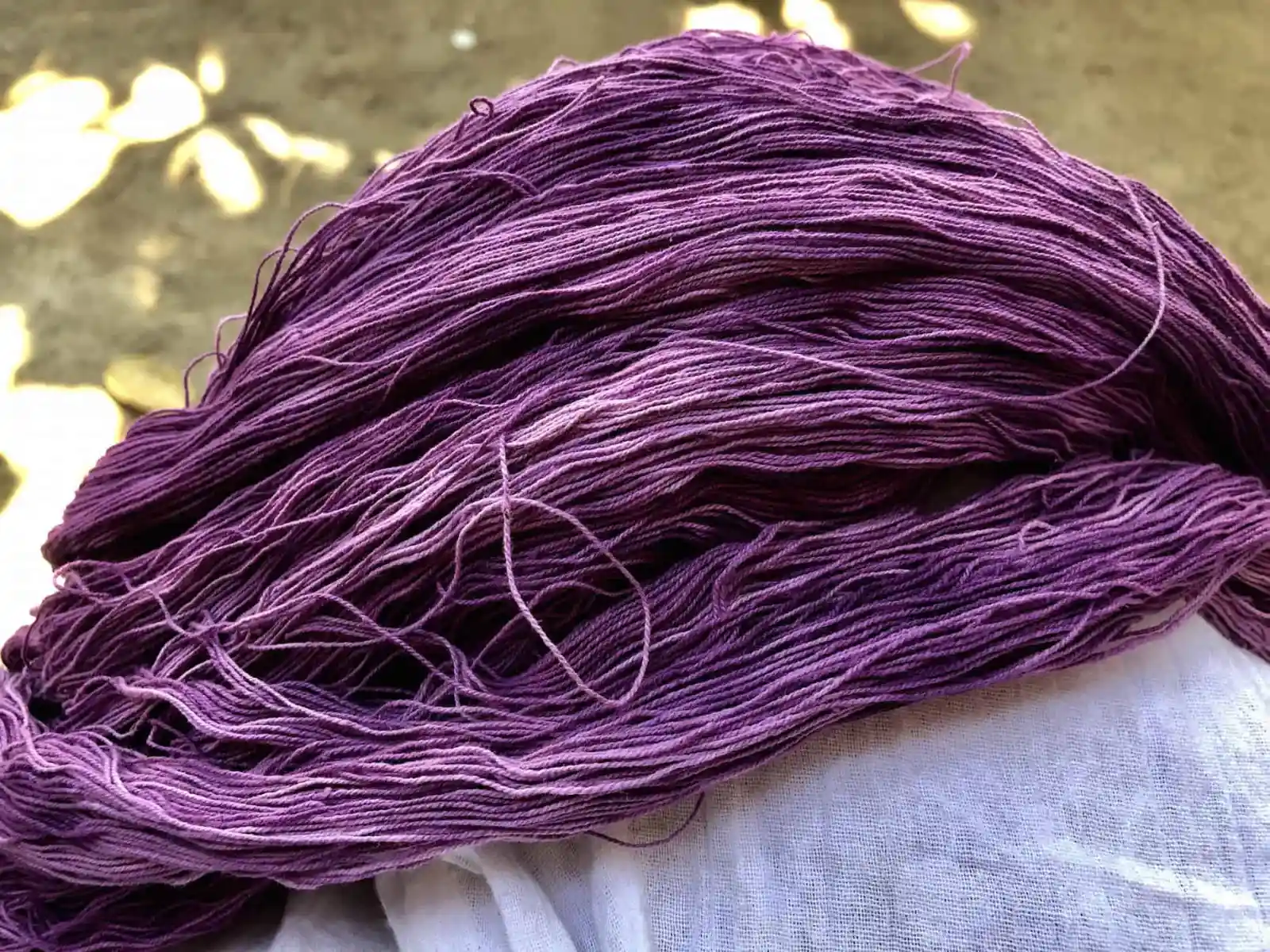
This is the Yen equivalent of Earth Tyrian purple. It too is harvested from snails, not sea whelks but "rune" land snails. They are found only in Edyrne, and, like almost all fauna there, are poisonous. This makes harvesting them vary difficult and dangerous, making rune purple the most expensive dye on Yen.
Ushgin / komchan
This is a drug that is obtained from a few cactus species that grow in the Hurannar highlands and the Tuarantu desert. It is somewhat similar to Earth mescaline. The weka crave it because it alters their sense of time and expands their consciousness. They claim it allows them to communicate with their forefathers. Ushgin is the telgu name for the drug; komchan the weka name.
Trade
Because of differences in climate, mineral wealth and industrial development, different regions produce different goods, prompting trade. In many places this is hampered by rough terrain and scarce infrastructure, but traders travel nonetheless, because there are profits to be made.
Overland trade
Much of Yen is rough terrain, hindering transport. Roads could alleviate this problem, but are almost non-existent, because flora growth tends to be fierce in most forest areas. Therefore, in most places only small amounts of luxury goods are traded. The exception are the Yrgiz steppes, where traders cover large distances east-west and even larger north-south. In some times and places the steppes are fairly peaceful and traders have to pay taxes to the nomads roaming the areas they ride through. But often the situation is chaotic and then bandits may pop up anywhere. Therefore, most traders group together in caravans.
River trade
Rivers are the prime arteries of bulk trade, though not all parts of them are navigable. Major trade rivers are the Tsuara in Nkala, the Hakare in Yamazui, the Oromosh east of the Siir, the Indika in the north and the Mucei in the southwest.
Sea trade
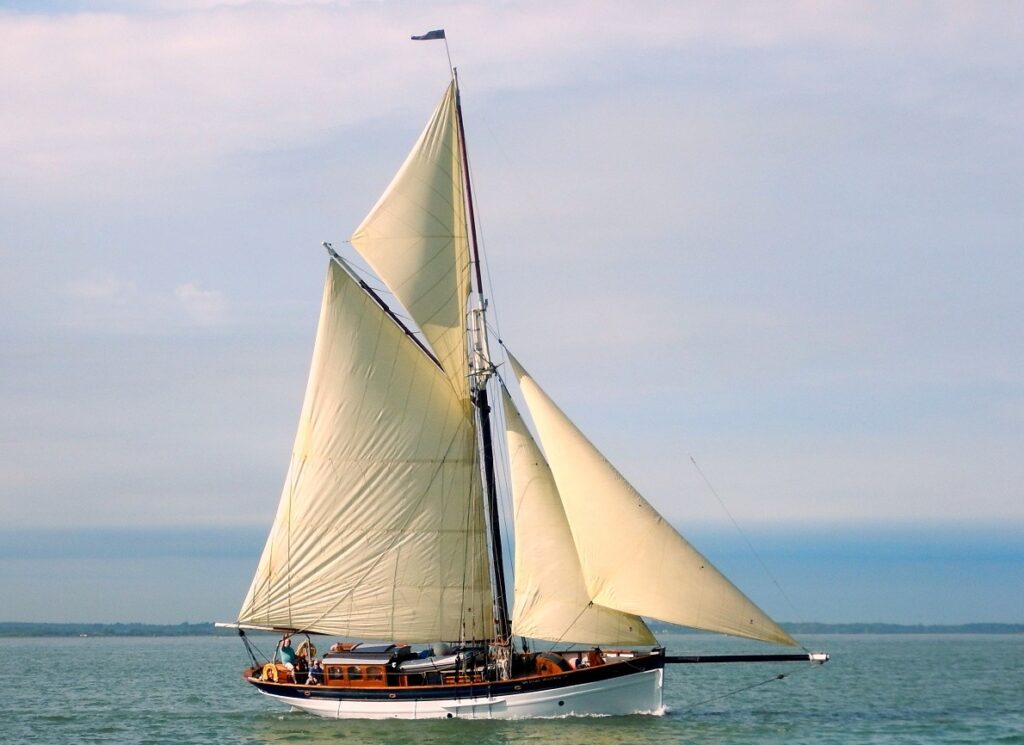
Big seagoing ships can transport large loads, but the Egyrr is a rough and dangerous sea and the Umi on the outside of Yen even more so. Most trade flows along the east coast of the Egyrr, some also westwards to Mictl. Traders run the risk of encountering pirates, especially in the southeast, where the Byrnall are notorious for seizing merchant vessels.
Local trade
Some goods that are valuable but relative local on Earth, prompting long distance trade, are so common on Yen that exchange in them is confined to regional trade. Examples are nuts, berries, fruit, honey, vegetables, legumes, sesame oil, herbs, beeswax, bird feathers, bamboo, timber, hemp, raw flax and linen. Though common, these are not ubiquitous, so there is some medium distance trade. For example the yokani and the peoples of the plains import bamboo, timber and other forest products in exchange for desert and steppe goods and minerals. Incense too can be found all over the world, like benzoin, camphor, frankincense, guggul, labdanum, makko, myrrh, opopanax, sandalwood and tolu, though here too there is substantial regional variation and consequently trade. Some dyes and pigments like madder, red/yellow ochre, saffron, sienna and umber are also common.
Per region
Global variation in climate, soil and mineral resources causes many differences in goods being harvested or otherwise produced. Despite the lack of roads, trade on Yen is intense and important. For details, see the geography page.